
Last updated November 24, 2026
 Sweep & inspection
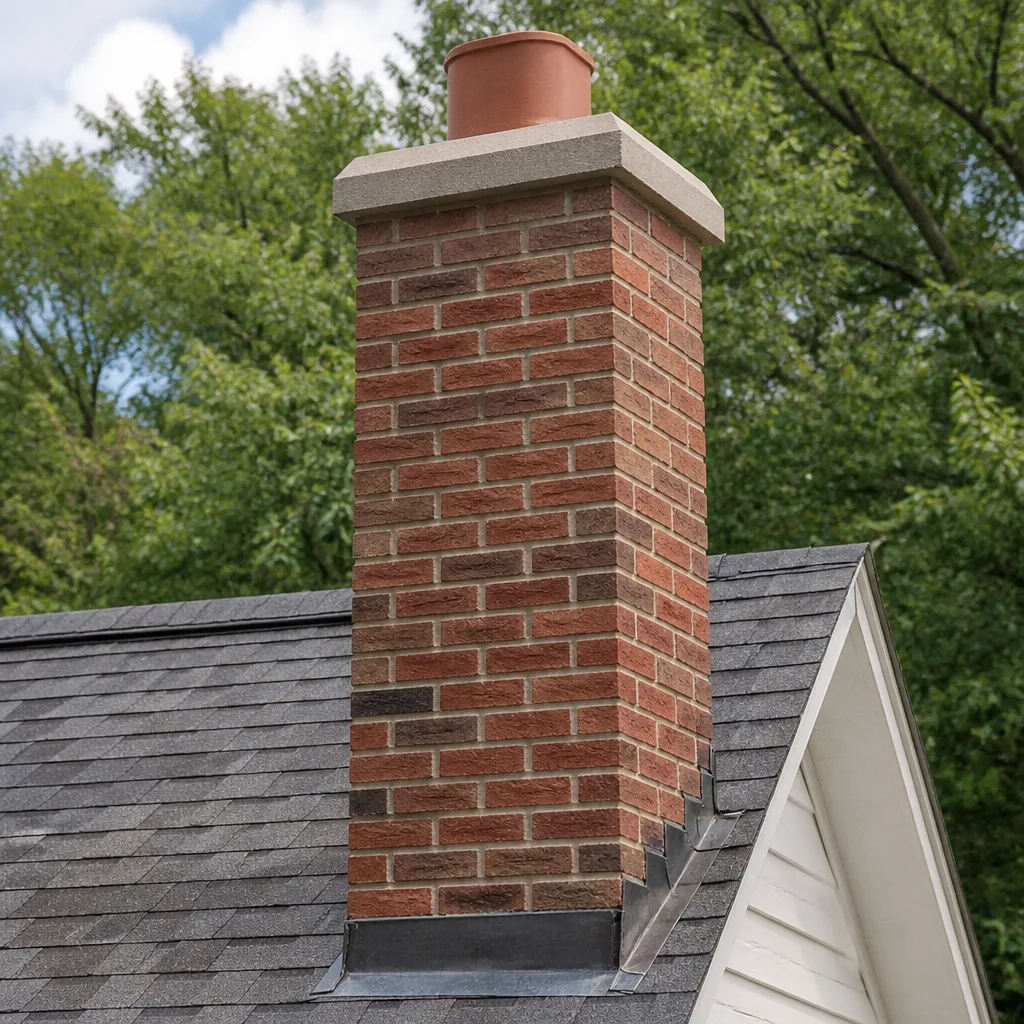
 Caps & crowns
 Flue relining
 Masonry repair
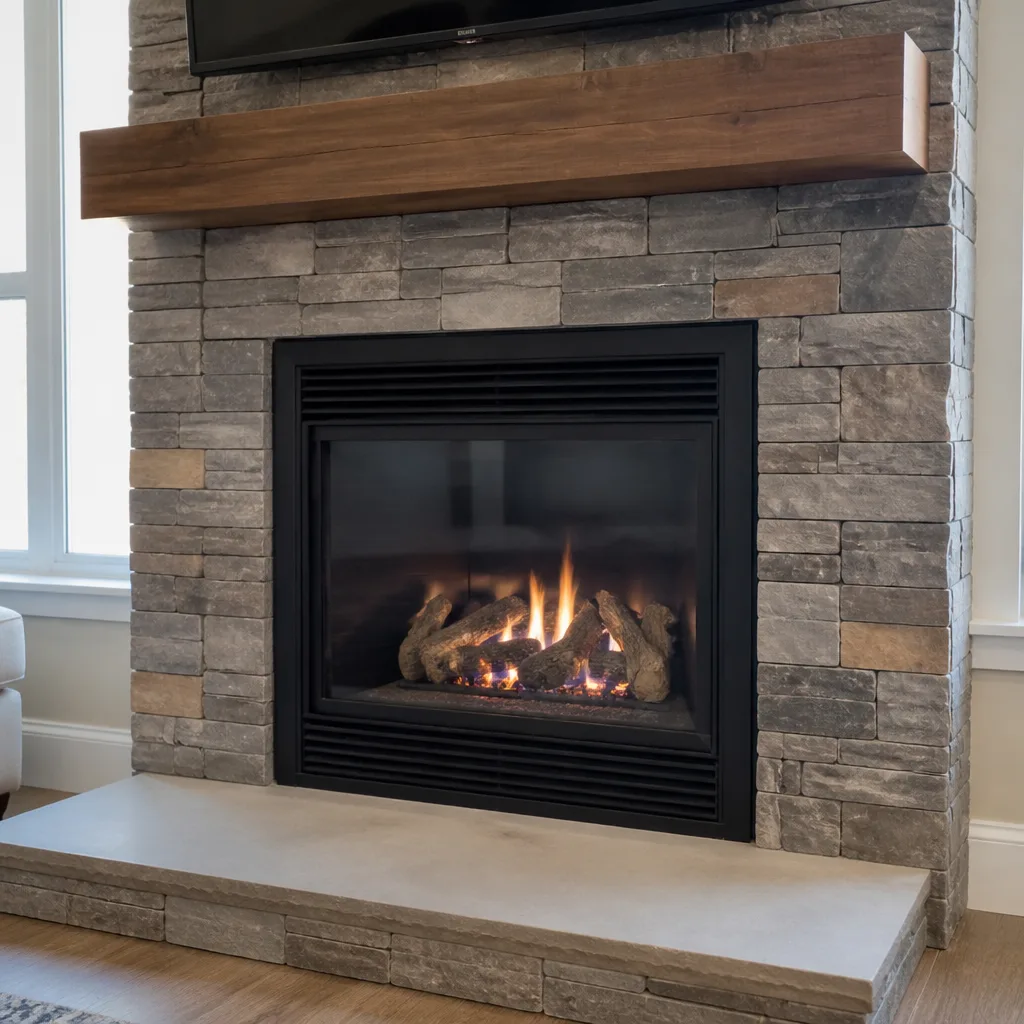 Gas fireplace service
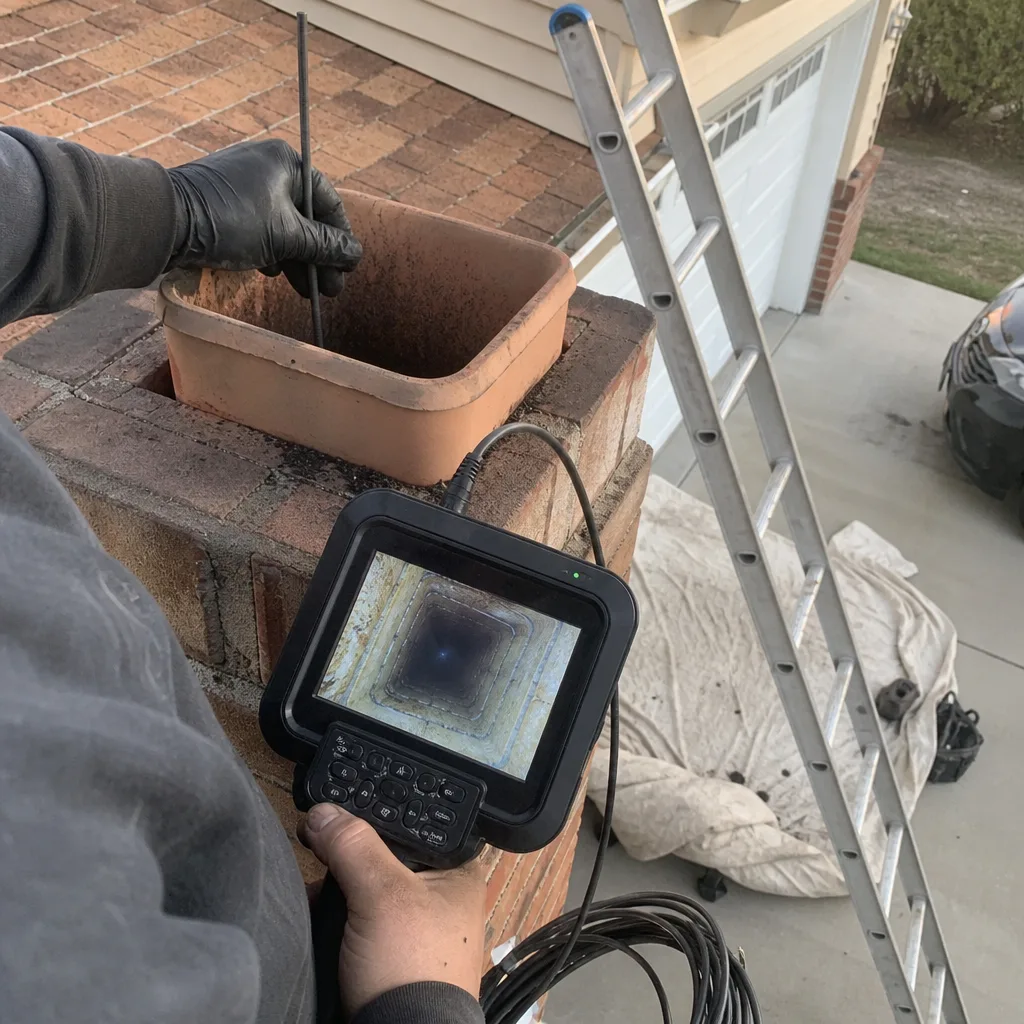
Level 1 sweep and inspection to the NFPA 211 annual standard - flue, crown, cap, and flashing checked and photographed
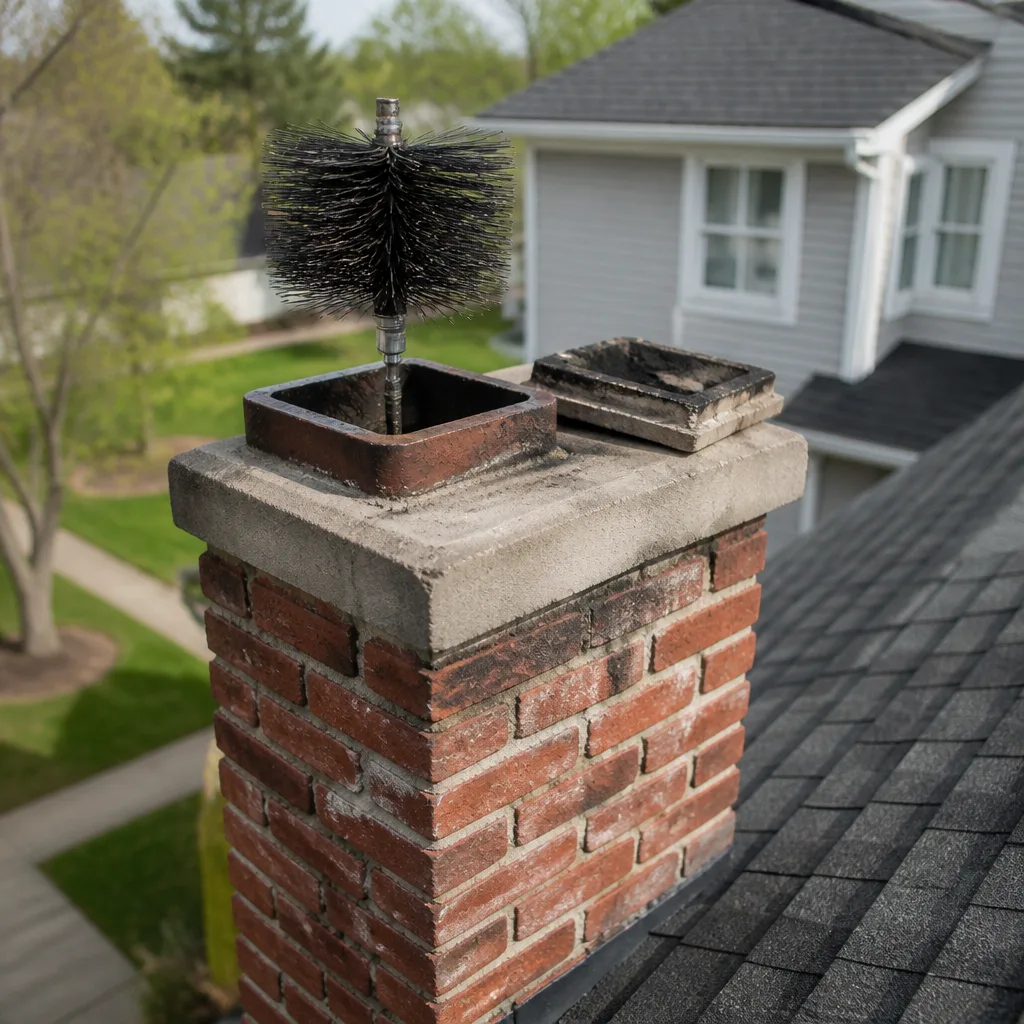
Chimney sweep logs do not sweep chimneys. They loosen some creosote - which then falls where a brush and vacuum still have to collect it.
Chimney Sweep Troubleshooting in Spanish Fork: Common Problems and How to Fix Them
If your fireplace smokes into the room every time wind picks up from the south, that’s not bad luck. It’s a pressure differential problem, and the fix usually has nothing to do with cleaning. Most homeowners in Spanish Fork chalk up backdraft, slow draws, and mystery odors to the quirks of an older house. In our experience, nearly every one of those symptoms traces back to a specific mechanical cause: a flue that’s too short for the roofline, a failing damper, negative pressure from a tight modern house, or a crack in the liner letting cold air in. This guide maps each symptom to its root cause so you can stop guessing and start solving. You’ll learn what you can safely check yourself, what needs a camera scope, and how to tell the difference before you call anyone.
Styles & brands we work with
- Sweep & inspection
- Caps & crowns
- Flue relining
- Masonry repair
- Gas fireplace service
Quick Answer
Smoke, odor, and draft problems in a Spanish Fork chimney almost always come from one of three categories: airflow and pressure issues (backdraft, short flue, tight house), combustion issues (wet wood, poor draft, blocked air supply), or structural issues (cracked liner, gaps in mortar, missing cap). The symptom alone won’t tell you which one you have. A camera inspection will. If smoke enters the room only on windy days, suspect pressure or flue height. If you smell creosote or smoke on warm days with no fire burning, suspect a blocked flue or a failing damper seal. If you see white staining or crumbling mortar, suspect water intrusion and structural damage that needs repair, not another sweep.
Table of Contents
- Draft, Combustion, and Structural Problems: Know the Difference
- Why Does Smoke Come Back Into the Room? Four Causes, One Symptom
- Wasatch Front Wind and Spanish Fork Backdraft
- The Two-Minute Decision Tree: Arrive at a Likely Cause
- What You Can Safely Check Yourself
- What Requires a Camera Scope and a Trained Eye
- Creosote, Cold Starts, and the Utah Valley Burning Season
- Caps, Crowns, and the Water Problem Nobody Quotes
- Common Mistakes to Avoid
- When to Call a Professional
- Frequently Asked Questions
- The Bottom Line
Draft, Combustion, and Structural Problems: Know the Difference
The single most useful thing you can learn about chimney troubleshooting is that not all chimney problems are the same kind of problem. There are three categories, and each one demands a completely different intervention. Mixing them up is how homeowners end up paying for a sweep that doesn’t fix the smoke, or a liner they didn’t actually need.
Draft problems are about airflow and pressure. The chimney isn’t pulling air up and out the way it should. The fire may burn fine once it gets going but smokes on start-up, or the room smells like smoke after the fire dies down. Draft problems get worse on windy days and better on calm ones. They’re caused by flue height, negative pressure inside the house, a flue that’s too large or too small for the firebox, or a nearby roofline or tree that disrupts airflow over the chimney top.
Combustion problems are about how well the fire burns. Wet wood, a firebox that’s too shallow, or a blocked combustion air supply all lead to a lazy, smoldering fire that produces far more creosote than it should. A chimney can be perfectly clean and still have a combustion problem. The fix is usually about fuel, air, and how you build the fire, not about the chimney itself.
Structural problems are physical damage: a cracked flue liner, gaps in the mortar joints, a spalling crown, a missing cap, or a rusted damper. These don’t always announce themselves with smoke. Sometimes the only sign is white efflorescence on the exterior brick, a musty smell, or water in the firebox after a storm. Structural problems are the ones that can’t wait, because a cracked liner lets heat and carbon monoxide reach combustible framing.
- Draft problem signs: smoke on start-up, smoke on windy days, smell after the fire dies, fire that struggles to catch
- Combustion problem signs: smoky fire, glass doors that blacken quickly, heavy creosote buildup, wood that hisses and steams
- Structural problem signs: white staining on exterior brick, crumbling mortar, water in the firebox, rust on the damper, visible cracks in the flue
If you can name which category your symptom belongs to, you’re already ahead of most homeowners who call us in Spanish Fork. When the local pro arrives to inspect, they can go straight to the right test instead of guessing alongside you.
Why Does Smoke Come Back Into the Room? Four Causes, One Symptom
Smoke in the room is the most common chimney complaint we hear, and it has at least four distinct causes. Treating all four the same way is why so many homeowners get a sweep and still have smoke the next cold night.
- The flue is too short for the roofline. A chimney needs to terminate high enough above the roof and any nearby ridge to draft properly. If a roofline addition, a taller neighboring structure, or even a large tree changes the airflow over the chimney top, smoke can spill back down. This is a pressure problem, not a dirt problem. The fix is usually extending the flue or adding a proper cap that improves draft.
- The house is under negative pressure. Modern homes in Spanish Fork are built tight, and running a kitchen exhaust fan, a dryer, or a bathroom vent pulls air out of the house. The chimney becomes the easiest path for replacement air, and that reversed flow pushes smoke into the room. Cracking a window near the firebox often proves it. The long-term fix is a combustion air supply or a draft-inducing cap.
- The damper is damaged or misaligned. A damper that doesn’t open fully, or one that’s rusted open, changes the pressure balance in the firebox. You can sometimes feel this yourself by opening the damper and checking that it moves freely and seats fully closed when you’re not burning.
- The flue is blocked or partially blocked. A nest, a fallen liner tile, or heavy creosote buildup narrows the flue and chokes the draft. This one requires a camera scope to confirm. It’s also the most dangerous, because a blocked flue forces carbon monoxide back into the living space instead of up and out.
Four causes, one symptom. Before you call anyone, note when the smoke happens: on start-up only, on windy days, when the kitchen fan runs, or constantly. That one detail narrows the cause faster than anything else, and it’s the first thing we ask when you call Chimney Sweep Spanish Fork.
Wasatch Front Wind and Spanish Fork Backdraft
Spanish Fork sits in the Utah Valley where wind coming off the Wasatch Front interacts with the local terrain in ways that change how a chimney drafts from one day to the next. Homeowners on the east side of town near the foothills often notice smoke spilling into the room when the wind comes from a specific direction, and then nothing at all on a calm evening. That pattern tells you the chimney’s height relative to the roofline and nearby ridges is the real issue.
Draft works because hot exhaust is lighter than the colder air outside. The taller the column of hot air inside the flue, the stronger the pull. When wind blows across the top of the chimney, it creates a low-pressure zone that can either help the draft or reverse it, depending on how the wind hits the cap, the flue termination, and any nearby structure. A short flue that works fine on a still night can fail the moment the wind picks up.
- Short flue: the chimney doesn’t extend far enough above the roof or a nearby ridge. Extending the flue or adding a taller cap often solves it.
- Wind hitting a flat or open top: a chimney with no cap or a poorly designed cap lets wind drop straight down the flue. A properly designed cap deflects it.
- Nearby structures and trees: a taller roofline, a neighboring chimney, or a mature tree can create turbulence that changes the pressure at the chimney top. In Spanish Fork, homes near the foothills deal with this more often than homes on the flatter valley floor.
- Tight house construction: combined with wind-driven negative pressure, a tight house makes backdraft much more likely. The two problems compound each other.
The good news is that wind-driven backdraft is one of the more solvable chimney problems. It’s a pressure diagnosis, not a cleaning one. When we inspect a Spanish Fork chimney that only smokes on windy days, we look at flue height, cap design, and the pressure balance inside the house before we recommend anything. If the fix is as simple as the right cap, we’ll tell you. If it needs a flue extension or a draft-inducing cap, you’ll see the measurement and the reasoning before you commit to anything.
The Two-Minute Decision Tree: Arrive at a Likely Cause
Use this decision tree to get from symptom to a likely cause in under two minutes. It won’t replace a camera inspection, but it will tell you which kind of problem you’re dealing with and whether it’s urgent.
- Does smoke enter the room only on windy days? Likely draft problem. Go to step 2.
- Does smoke enter on start-up but clear once the fire is burning well? Likely negative pressure or a cold flue. Try cracking a window near the firebox. If that fixes it, you have a pressure problem, not a blockage.
- Does smoke enter consistently, even on calm days, with every fire? Likely a blockage or a structural problem. Stop burning and schedule a camera inspection.
- Do you smell smoke or creosote on warm days with no fire burning? Likely a blocked flue or a failing damper seal. Stop burning and schedule an inspection.
- Is there white staining on the exterior brick, or water in the firebox after rain? Likely structural: a failed crown, a missing cap, or a cracked liner. Schedule an inspection before the next storm.
- Is the fire lazy, smoky, and producing heavy creosote? Likely a combustion problem. Check your wood moisture first, then the combustion air supply.
- Does the fire struggle to catch at all, even with dry wood? Likely a draft problem or a blockage. Schedule an inspection.
If you land on “stop burning” at any step, that’s the answer. Don’t run a fire through a suspected blockage to see if it clears. Call Chimney Sweep Spanish Fork at (877) 492-4380 and describe what you found. We answer 24/7, and a camera inspection will confirm the cause in minutes.
What You Can Safely Check Yourself
There’s a real difference between “check” and “fix” when it comes to chimneys, and knowing where that line sits keeps you safe. A homeowner can safely inspect several things with a flashlight and a mirror. Anything involving the flue interior, the liner, or the chimney top requires a trained professional and the right equipment.
Safe to check yourself:
- The firebox: look for cracked firebrick, crumbling mortar joints, or gaps between the brick. These are signs of heat damage or water intrusion and should be documented for the inspector.
- The damper: open and close it by hand. It should move smoothly and seat fully closed. If it’s rusted, stuck open, or won’t close flush, note it.
- The visible flue opening: with a flashlight, look up into the flue from the firebox. You can see the first several feet. Look for heavy black creosote, visible cracks in the liner, or anything blocking the opening. Don’t reach up into it.
- The firebox floor: check for ash buildup and any signs of rust or water staining.
- The exterior chimney: from the ground, look for white staining, crumbling mortar, a cracked crown, or a missing cap. Binoculars help.
What not to do: don’t climb onto the roof to inspect the chimney top, don’t reach into the flue, and don’t try to clear a suspected blockage from below. Chimney work at height is a fall hazard, and anything inside the flue that requires tools can damage the liner or injure you. We recommend a trained professional for everything above the firebox opening.
What you find during a self-check is valuable. Write it down or photograph it. When you call us, that information helps the local pro plan the right inspection and bring the right parts. It’s the difference between a general sweep and a targeted diagnosis.
What Requires a Camera Scope and a Trained Eye
A camera scope sees what a flashlight can’t: the full interior of the flue, the condition of the liner, the mortar joints between tiles, and any obstruction that isn’t visible from the firebox. This is the tool that turns “smoke in the room” into a specific diagnosis.
Here’s what a camera inspection looks for:
- Liner cracks and gaps: a cracked flue liner lets heat and carbon monoxide reach combustible framing. This is the most serious finding and the one that usually triggers a liner repair or resurfacing recommendation.
- Mortar joint deterioration: the joints between flue tiles erode over time, especially in chimneys that see heavy use or water intrusion. Gaps in the joints are a structural problem, not a draft problem.
- Creosote buildup and glazing: heavy, glazed creosote is a chimney fire risk and can’t be removed with a standard brush alone. A camera shows the depth and extent, including in the offsets where brushes miss.
- Obstructions: nests, fallen tiles, or debris that narrows the flue and chokes the draft.
- Offset and transition areas: the bends in an older chimney are where damage and blockages hide most often. A camera sees into them, a flashlight doesn’t.
We include a camera inspection and a photo report as part of our service so you can see what we see. That matters because the biggest hesitation homeowners have is being told they need thousands of dollars in liner or masonry work they have no way to verify. Nothing is recommended without camera evidence you can see for yourself, and we’ll tell you plainly when a repair can safely wait. If the liner is sound and the smoke is a pressure problem, you’ll hear that too, even though it means less work for us. When a liner does need restoration, HeatShield lets us resurface the existing flue in place rather than tearing it out, which is a different job and a different conversation than a full replacement.
Creosote, Cold Starts, and the Utah Valley Burning Season
Spanish Fork winters are cold enough that many homeowners burn steadily through the season, and steady burning produces creosote in a predictable pattern. The cold starts in the morning and evening are where most of it accumulates, because a fire that’s still warming up produces incomplete combustion and a lot of smoke before the draft establishes itself.
Creosote forms in three stages. First-degree creosote is the light, flaky soot a brush removes easily. Second-degree creosote is a crusty, hardened deposit that needs more work. Third-degree creosote is glazed and tar-like, often the result of a smoldering fire with a poor draft, and it’s the most dangerous because it fuels chimney fires. The fix for glazed creosote isn’t a standard sweep. It requires a specific chemical treatment and a professional who knows how to apply it without damaging the liner.
How do you reduce creosote in a Utah Valley winter? Burn dry wood, and burn hot fires rather than long smoldering ones. Wood with high moisture content produces more smoke and more creosote, and the smoke smells different, a sharp, acrid note rather than a clean wood smell. A fire that hisses and steams is a sign of wet wood. Getting ahead of the buildup is far easier than dealing with it after the season. The best time to book a sweep in Spanish Fork is before the burning season starts, when the flue is clean and the inspection can confirm everything’s ready for the cold months ahead.
If you’ve been burning steadily for several seasons without a sweep, the creosote load is likely higher than you’d expect. A camera inspection will tell you exactly how much is there and whether it needs more than a standard cleaning. A sweep that ignores glazed creosote isn’t a complete job. We tell you what we find and quote the fix before we touch anything.
Caps, Crowns, and the Water Problem Nobody Quotes
Water is the most common cause of chimney damage in Spanish Fork, and the most common source of water intrusion is a missing or damaged cap and crown. Many homeowners have had a sweep clean the flue without ever being quoted a cap or crown repair, and the damage keeps getting worse between visits.
Here’s what water does to a chimney over time. The crown is the concrete or mortar cap at the very top of the chimney that sheds water away from the flue. When it cracks, water gets into the masonry, freezes, and expands. That freeze-thaw cycle opens the cracks wider, spalls the brick face, and eventually reaches the flue liner. The interior of the chimney is where the damage really matters, because a water-damaged liner can fail without any visible exterior sign.
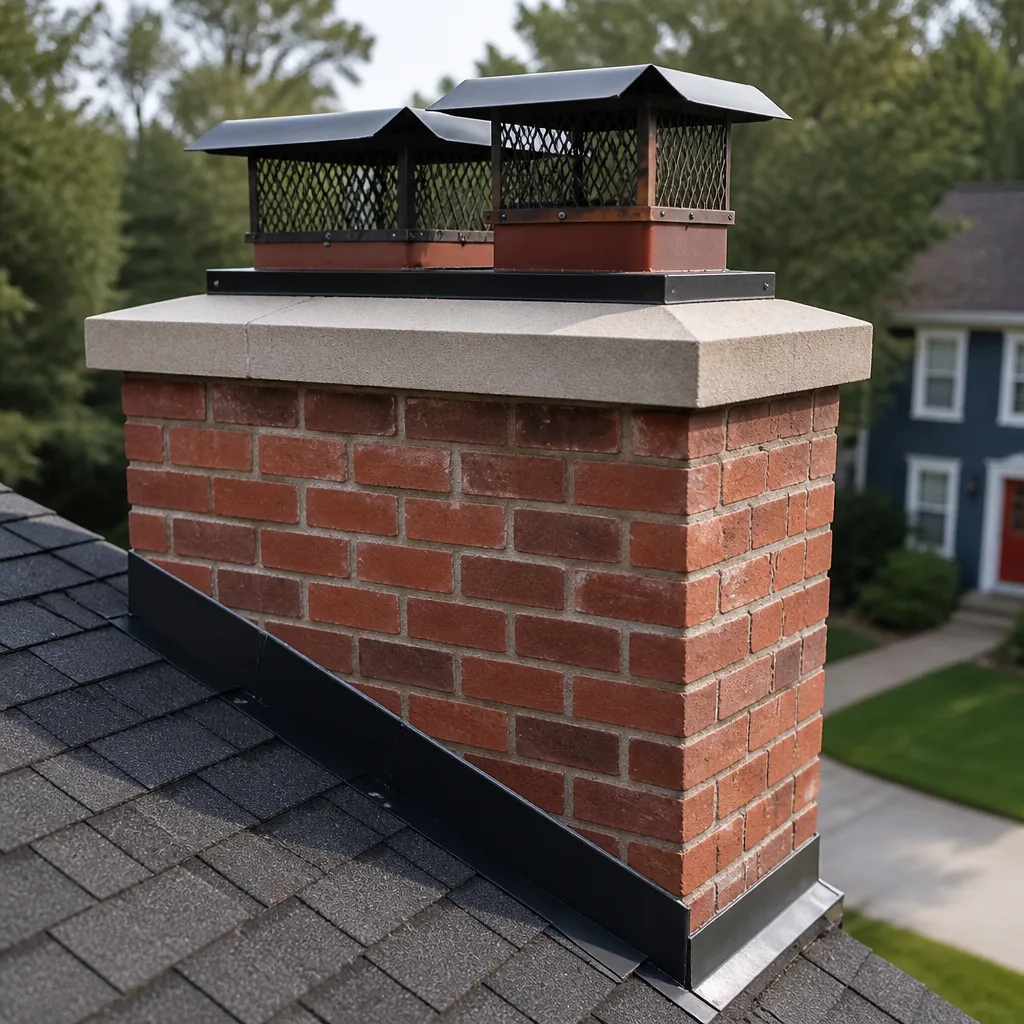
A chimney cap does two jobs. It keeps rain and snow out of the flue, and it improves the draft by deflecting wind away from the chimney top. That second job is why a cap sometimes fixes a backdraft problem that has nothing to do with cleaning. A well-designed cap is not an upsell, it’s the reason repairs last.
- Signs your cap or crown needs attention: visible cracks in the concrete crown, a missing or loose cap, white staining on the exterior brick, rust streaks, or water in the firebox after rain.
- What we do: we install chimney caps and crowns as part of our service so there’s no gap between the diagnosis and the waterproofing fix. No handoff to another contractor.
- Materials: we use contractor-grade products, including Olympia Chimney and Copperfield components, rather than the hardware-store alternative. These are built to handle Utah Valley freeze-thaw cycles.
If your chimney has gone several seasons without a cap or crown check, book an inspection before the next winter. The cost of a cap and crown repair is small compared to the liner replacement that water damage eventually forces. For a full look at the structural repair side, see our chimney repair page, and for the fireplace side, our fireplace repair page covers damper and firebox work.
Common Mistakes to Avoid
- Assuming smoke means the chimney needs sweeping. A clean chimney can still smoke if the problem is draft or pressure. Paying for a sweep before diagnosing the cause wastes money and leaves the real problem in place.
- Burning wet or unseasoned wood. Wet wood burns cool and produces far more creosote. In a Spanish Fork winter, the difference between dry wood and wet wood is the difference between a clean flue and a glazed one by spring.
- Skipping the cap because the crown “looks fine.” A crown can look intact from the ground and still have hairline cracks that let water in. Water damage to the liner usually starts before there’s any visible exterior sign.
- Hiring a sweep who doesn’t use a camera. A brush and a flashlight can’t see into the offsets or confirm the liner condition. Without a camera scope, a sweep is a guess, not a diagnosis.
- Running the kitchen exhaust fan while the fire is lit. In a tight modern house, that fan can pull enough air out of the room to reverse the draft. It’s a small habit with a big effect on backdraft problems.
- Waiting until the middle of the burning season to book. The best time to get an inspection in Spanish Fork is before the cold sets in. Booking ahead means the flue is clean and any repair is done before the first fire.
- Accepting a repair recommendation without seeing the evidence. If a sweep tells you the liner needs thousands of dollars of work, ask to see the camera footage. A reputable inspector will show it without being asked.
Avoiding these mistakes won’t fix every problem, but they eliminate the most common ones we see when homeowners call us after a previous sweep left them with the same symptoms. For the cleaning side, our chimney sweep page covers what a proper sweep includes and why the camera matters.
When to Call a Professional
Call a professional if you smell smoke or creosote with no fire burning, if smoke enters the room on every fire, if you see white staining or water in the firebox, or if the fire struggles to catch even with dry wood. Also call if it’s been more than a year since the last sweep, if you’ve had a chimney fire, or if the cap or crown shows any visible damage. These aren’t problems to troubleshoot over a few more fires. Each one can get worse, and some are a safety issue. The local pro is licensed and insured as their state requires, and we can work with your insurer if a repair turns out to be covered.
When you call, describe what you’ve noticed and when it happens. That one detail narrows the cause faster than anything else. Chimney Sweep Spanish Fork offers free estimates in Spanish Fork. Call (877) 492-4380. We answer 24/7. Fast dispatch from 7am to 7pm, Sunday through Friday. A call outside dispatch hours is booked into the next opening.
Frequently Asked Questions
Wind-driven smoke is a pressure problem, not a cleaning problem. The wind creates a low-pressure zone at the chimney top that can reverse the draft, especially if the flue is short relative to the roofline or the cap doesn’t deflect wind well. Extending the flue or installing a properly designed cap usually solves it. A camera inspection confirms whether there’s also a blockage contributing to the problem. Call (877) 492-4380 for an exact quote. Estimates are free.
A smoke or creosote smell with no fire usually means a blocked flue, a failing damper seal, or negative pressure pulling air down the chimney. The most serious possibility is a partially blocked flue, which is also a carbon monoxide risk. Stop burning until an inspection confirms the cause. Call (877) 492-4380 to book a camera inspection.
You can safely check the damper operation, the visible flue opening, the firebox condition, and the exterior cap and crown from the ground. You can’t safely fix a draft problem, clear a blockage, or repair a liner yourself. Anything above the firebox opening is a job for a trained professional. Call (877) 492-4380 for an exact quote on a diagnosis.
Most chimneys should be swept once a year, and more often if you burn heavily through the winter. Spanish Fork winters mean steady burning for many households, which builds creosote faster than occasional use. The best time to book is before the burning season starts. Call (877) 492-4380 for an exact quote. Estimates are free.
A sweep cleans the flue. An inspection diagnoses its condition using a camera and a trained eye. You need both, and they’re separate jobs with separate purposes. A sweep without a camera inspection is a guess, not a diagnosis. When we come out, we sweep, inspect with a camera, and give you a photo report of what we found. Call (877) 492-4380 for an exact quote.
Pricing is per job, and the written estimate sets the final price. We don’t give a flat figure before we see the job because a one-season flue and a ten-season flue are different work, and a job that turns up glazed creosote or a damaged liner needs a different approach. The estimate is free. Call (877) 492-4380 for an exact quote.
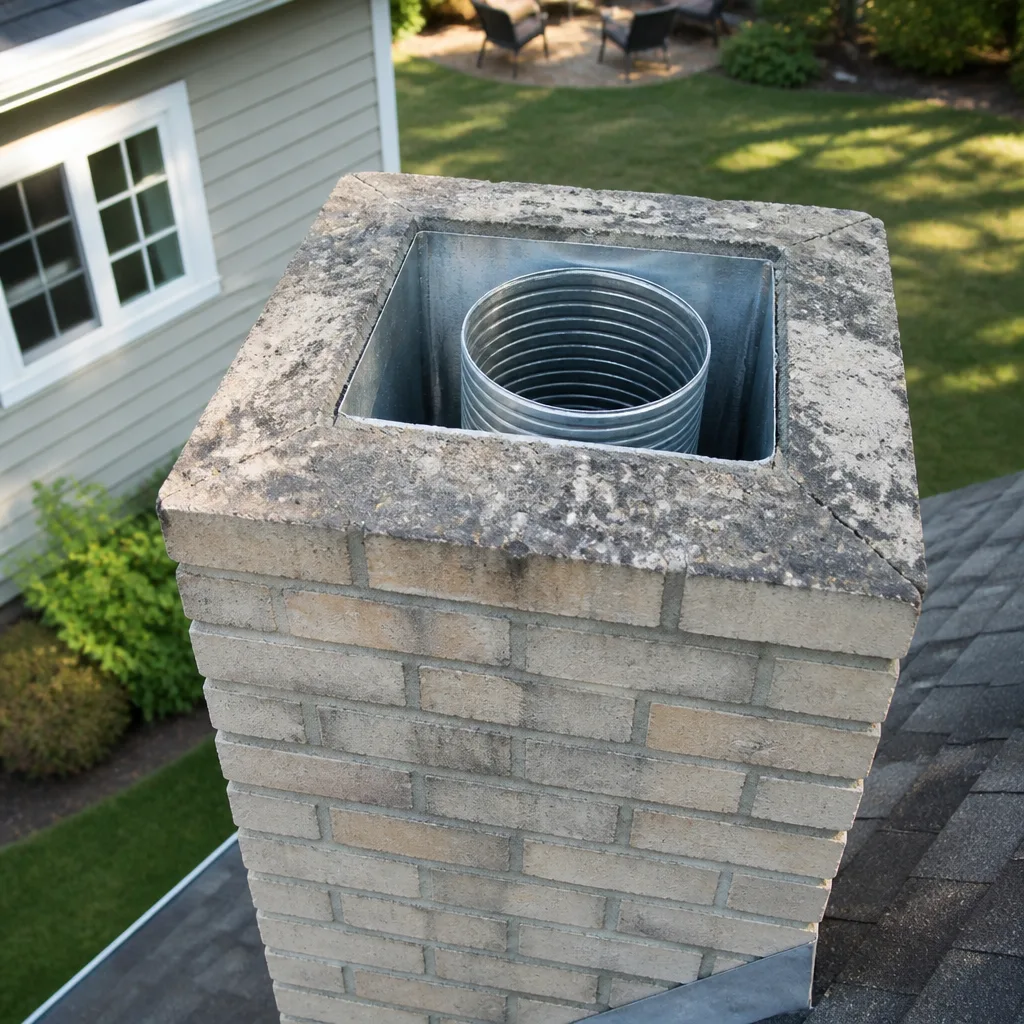
Not always, and we’ll tell you when you don’t. A cracked or damaged flue liner does need attention, because heat and carbon monoxide can reach combustible framing, but resurfacing is often an option rather than a full replacement. HeatShield lets us restore a damaged flue in place, and we use DuraFlex and Famco liner systems when a flexible liner is the right fit for an older or irregular chimney. Whatever the recommendation, it comes with camera evidence you can see. Call (877) 492-4380 for an exact quote.
Creosote accumulates, and in the worst case it reaches the glazed stage, which is the fuel source for chimney fires. A flue that’s been neglected also hides water damage that’s easier to repair early. Skipping one season isn’t a guarantee of a fire, but it does mean you’re burning through a problem you can’t see. Call (877) 492-4380 to book a sweep before the season starts.
The Bottom Line
Most chimney problems in Spanish Fork fall into three categories: draft, combustion, and structural. The symptom alone won’t tell you which one you have, but the pattern does. Smoke on windy days points to pressure and flue height. Smoke on warm days with no fire points to a blockage or a failing damper. White staining and water in the firebox point to a cap, crown, or liner problem that needs repair, not another sweep. The two-minute decision tree in this guide gets you to a likely cause. A camera inspection confirms it. Nothing gets recommended without camera evidence you can see, and the local pro will tell you plainly when a repair can safely wait. If you’re not sure which category you’re in, that’s reason enough to call.
At Chimney Sweep Spanish Fork, we handle the full chimney system, sweep through structural repair, on one call. We use contractor-grade materials, including HeatShield, DuraFlex, Olympia Chimney, and Copperfield, and the local pro is licensed and insured as their state requires. Our technicians have up to 9 years of experience.
If your chimney is smoking, smelling, or due for a sweep, call (877) 492-4380 for a free estimate. We answer 24/7. Fast dispatch from 7am to 7pm, Sunday through Friday. A call outside dispatch hours is booked into the next opening. Start with the free estimate and a camera inspection, and you’ll know exactly what you’re dealing with. Visit Chimney Sweep Spanish Fork to learn more about how we work.
Written by the team at Chimney Sweep Spanish Fork.
See the difference
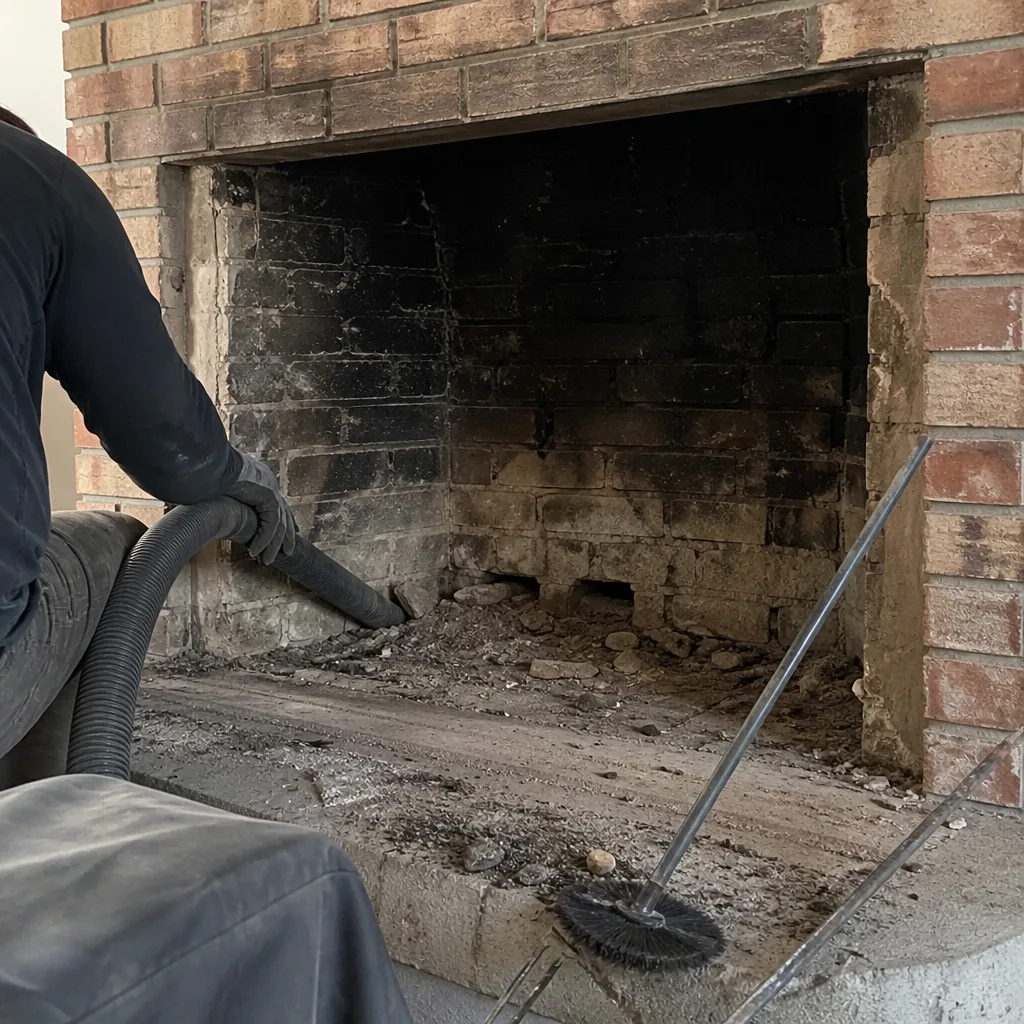 Before
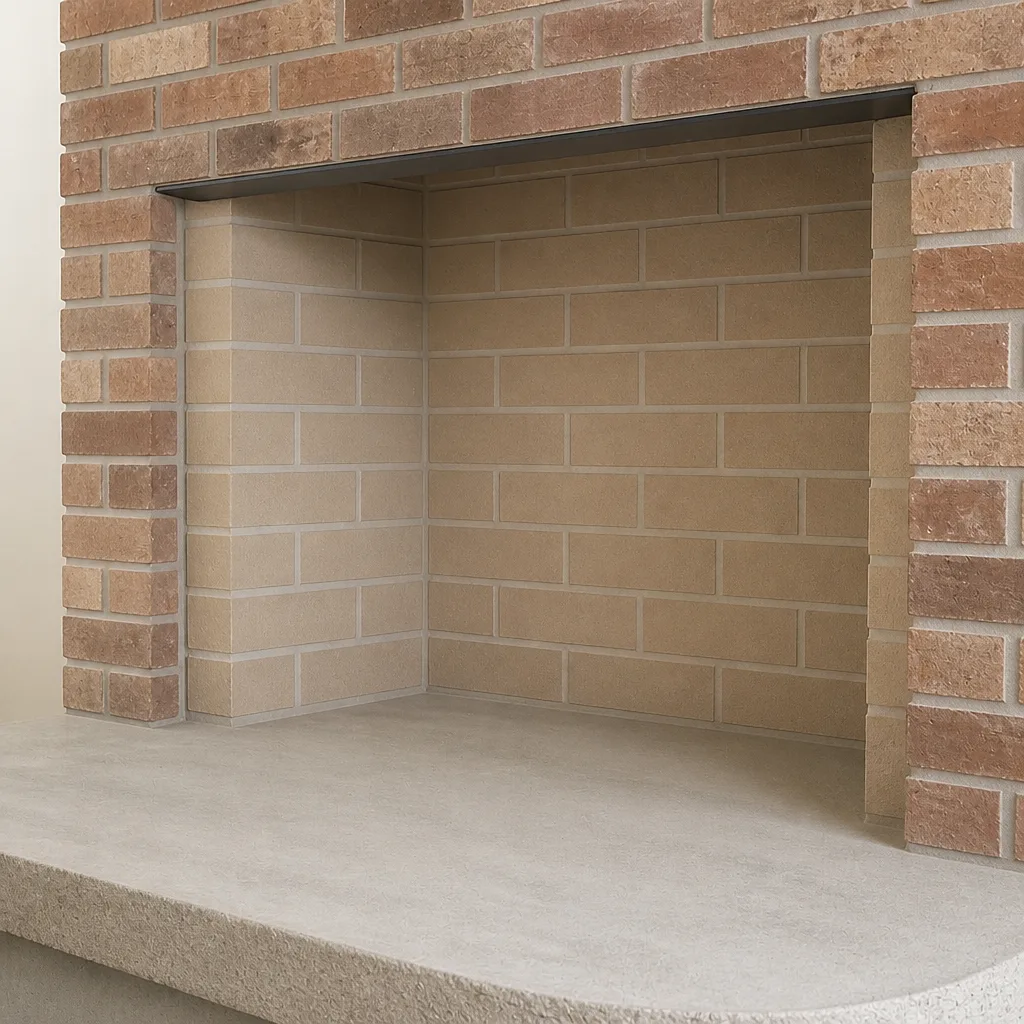 After
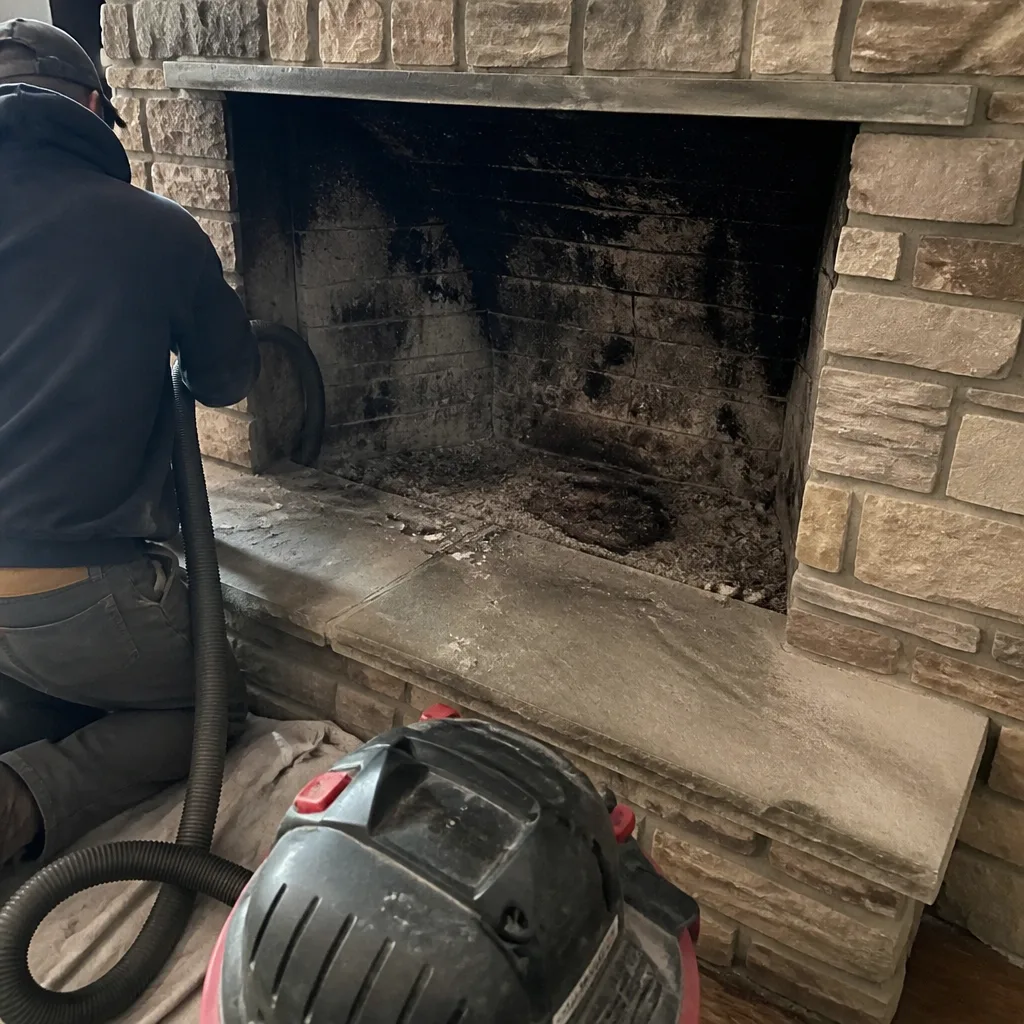 Before
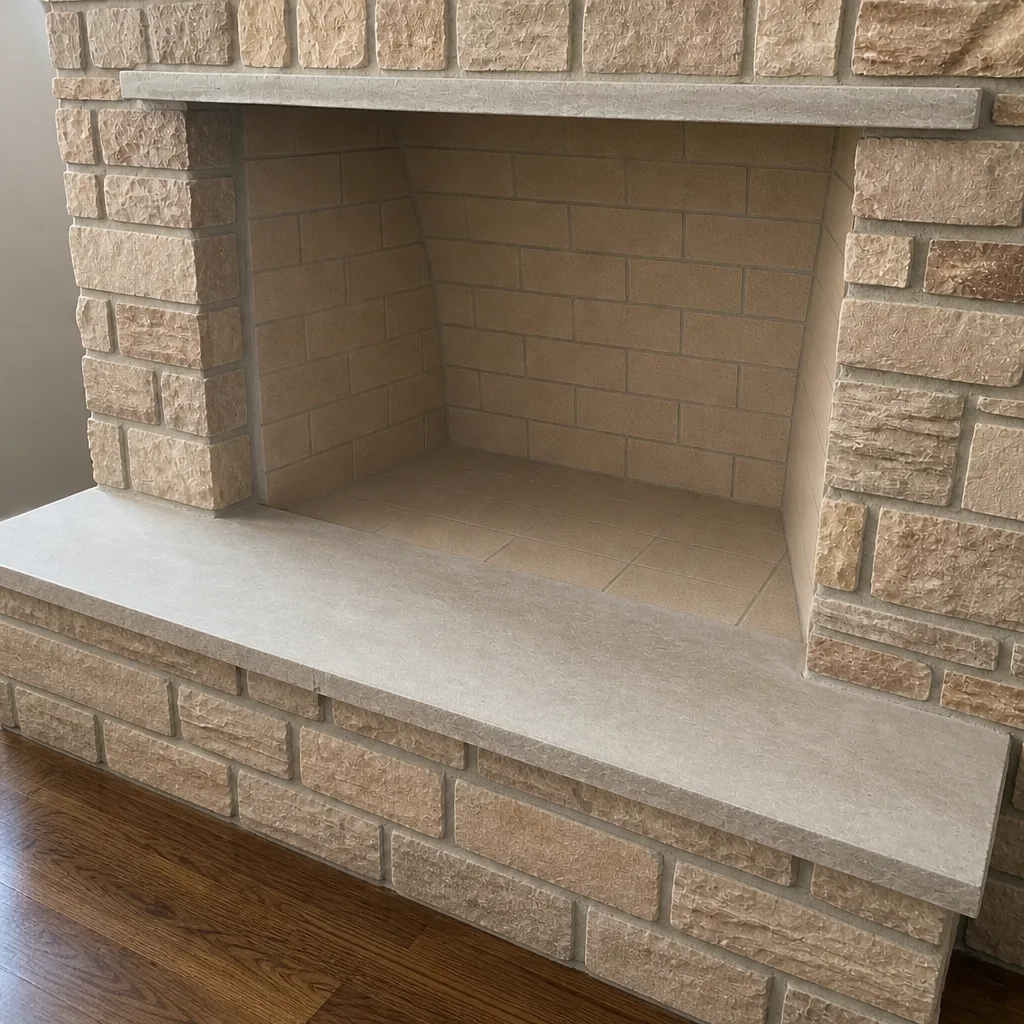 After
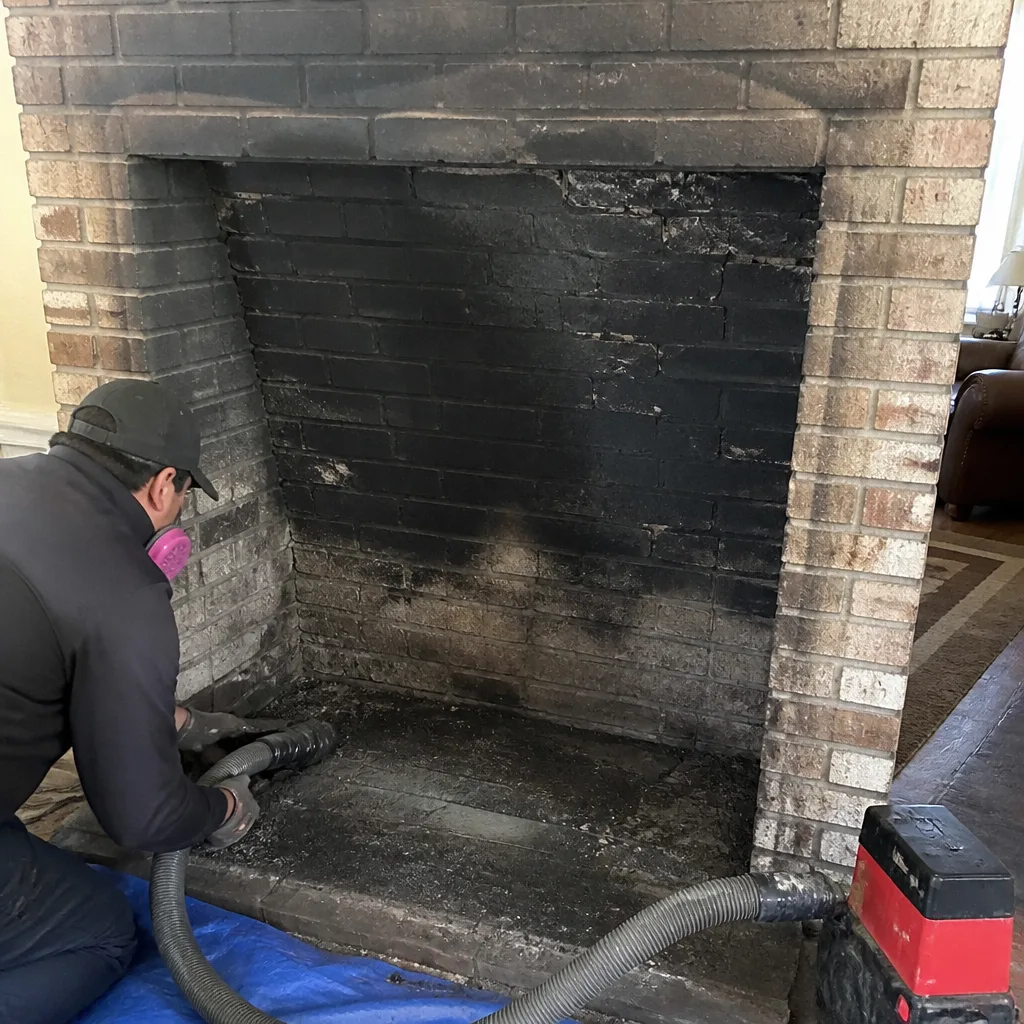 Before
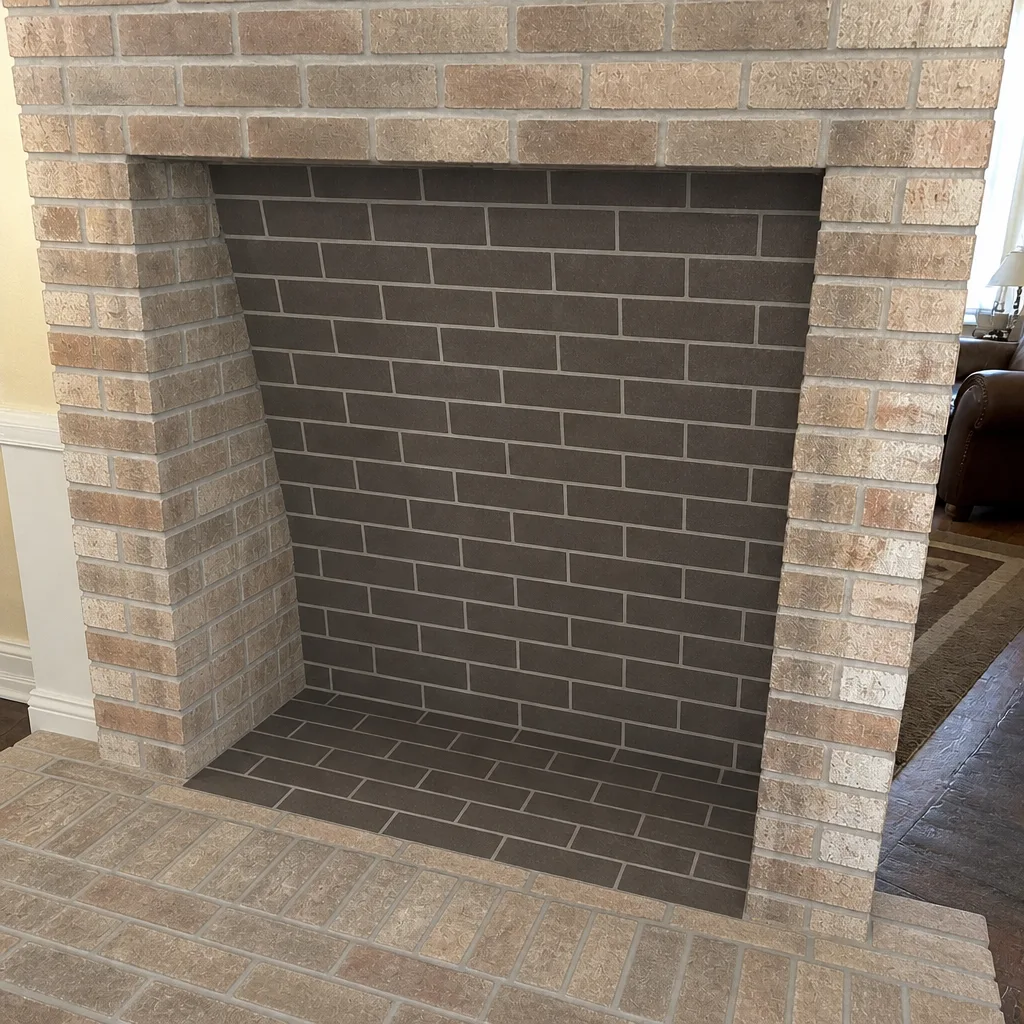 After