
Last updated November 24, 2026
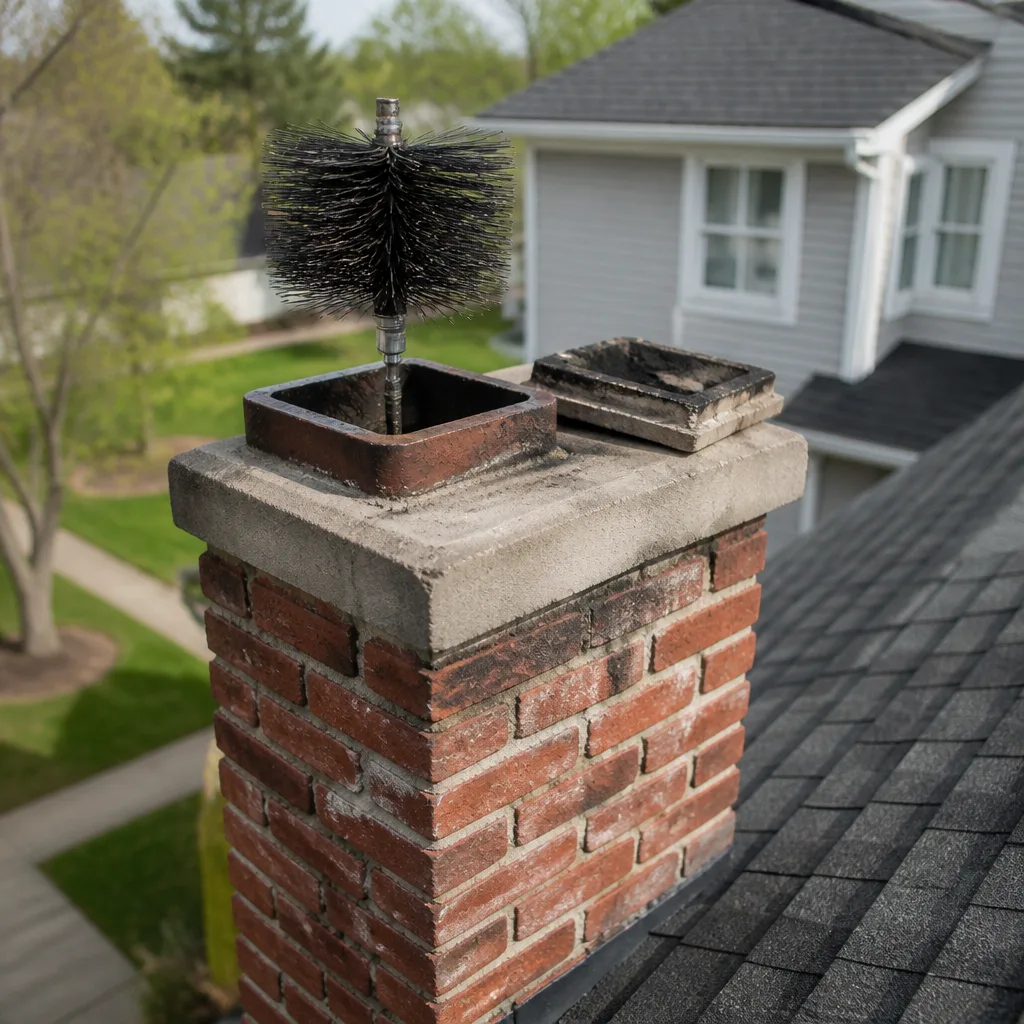 Sweep & inspection
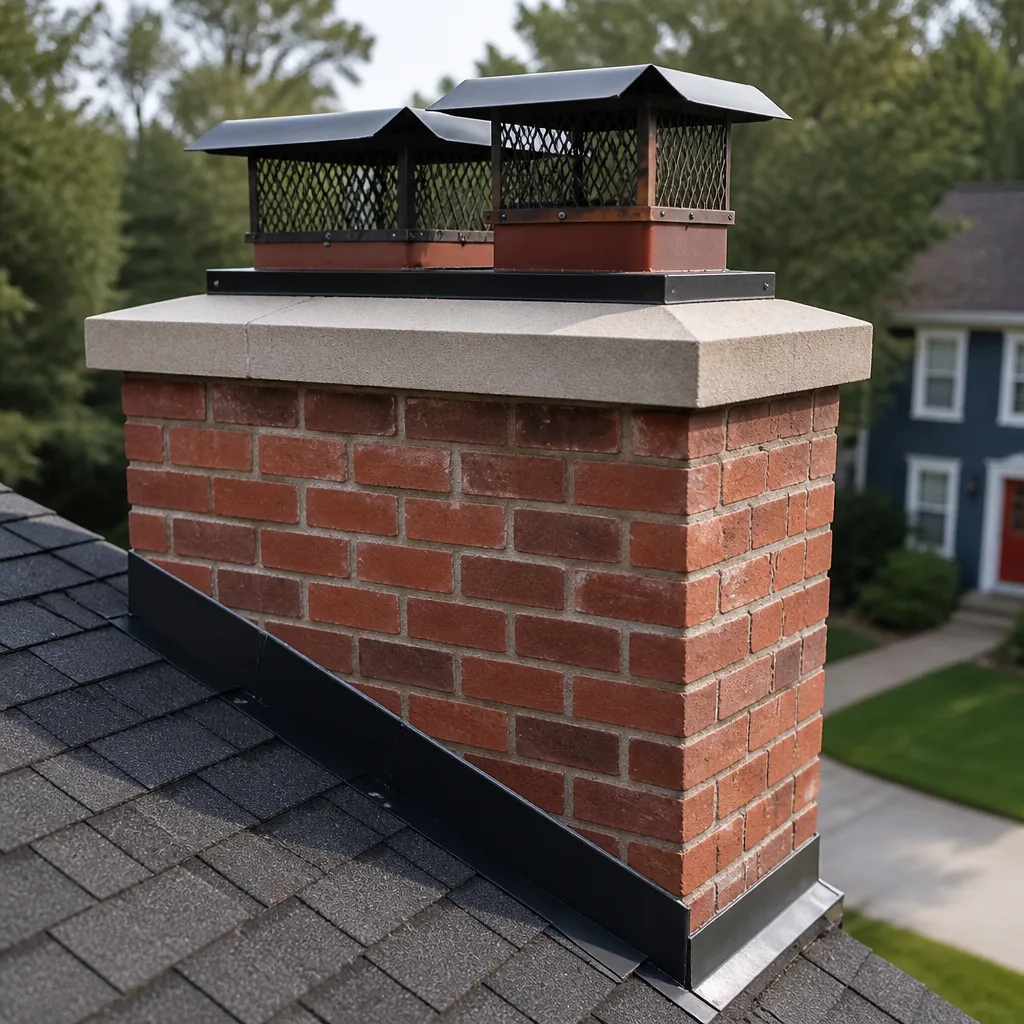 Caps & crowns
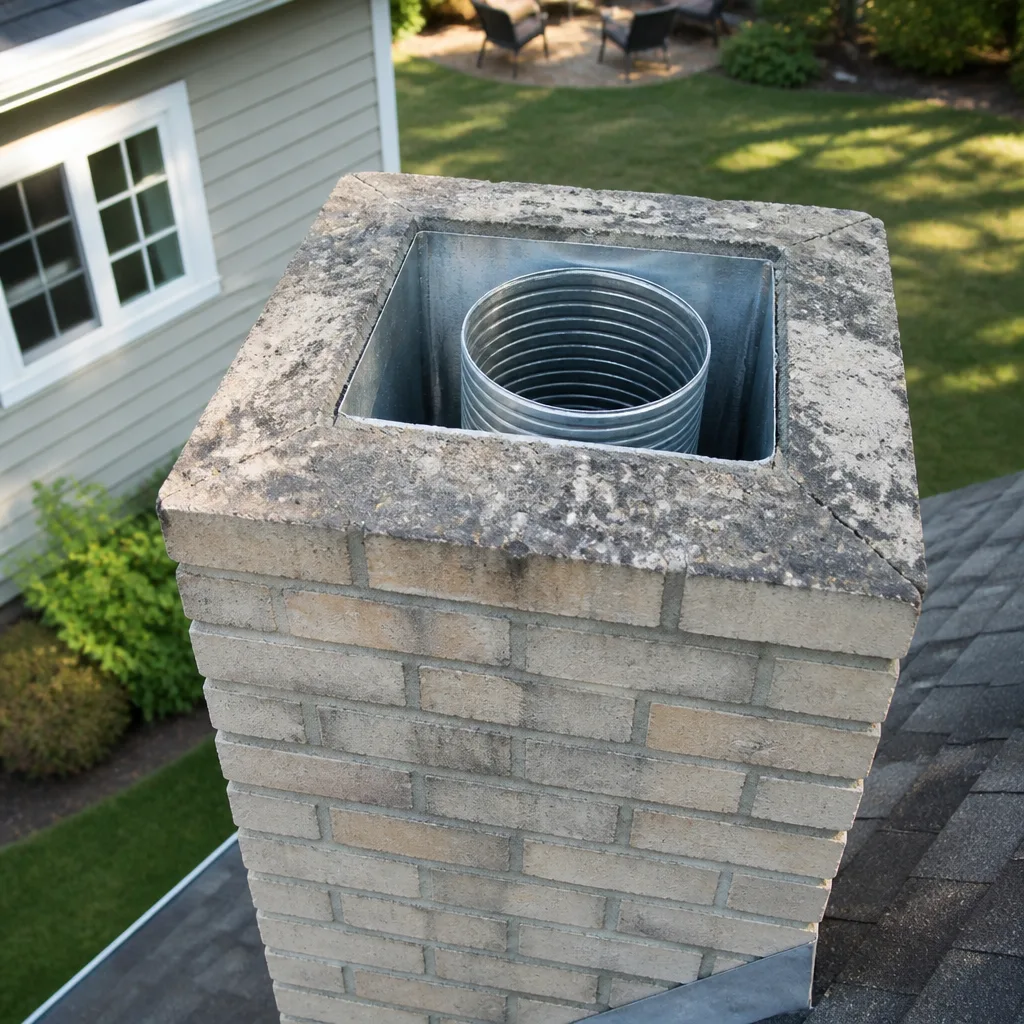 Flue relining
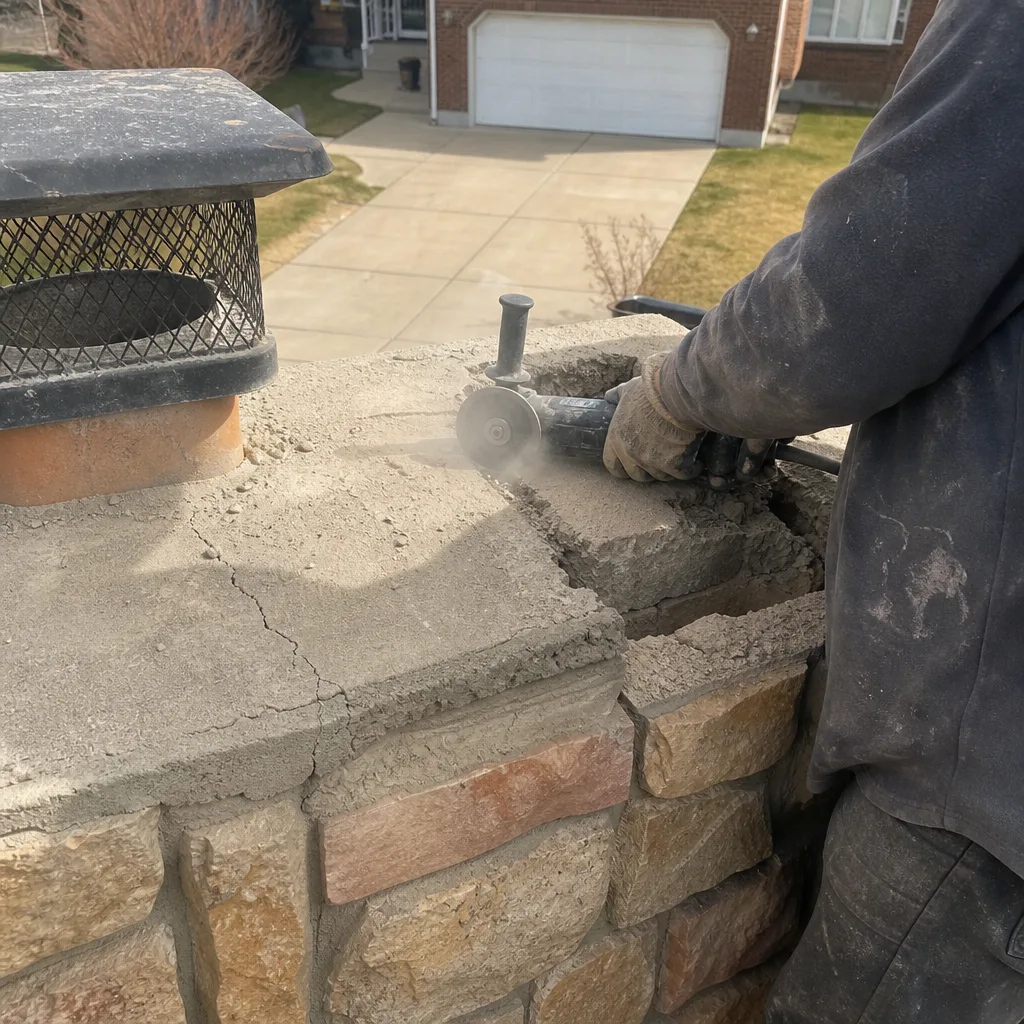
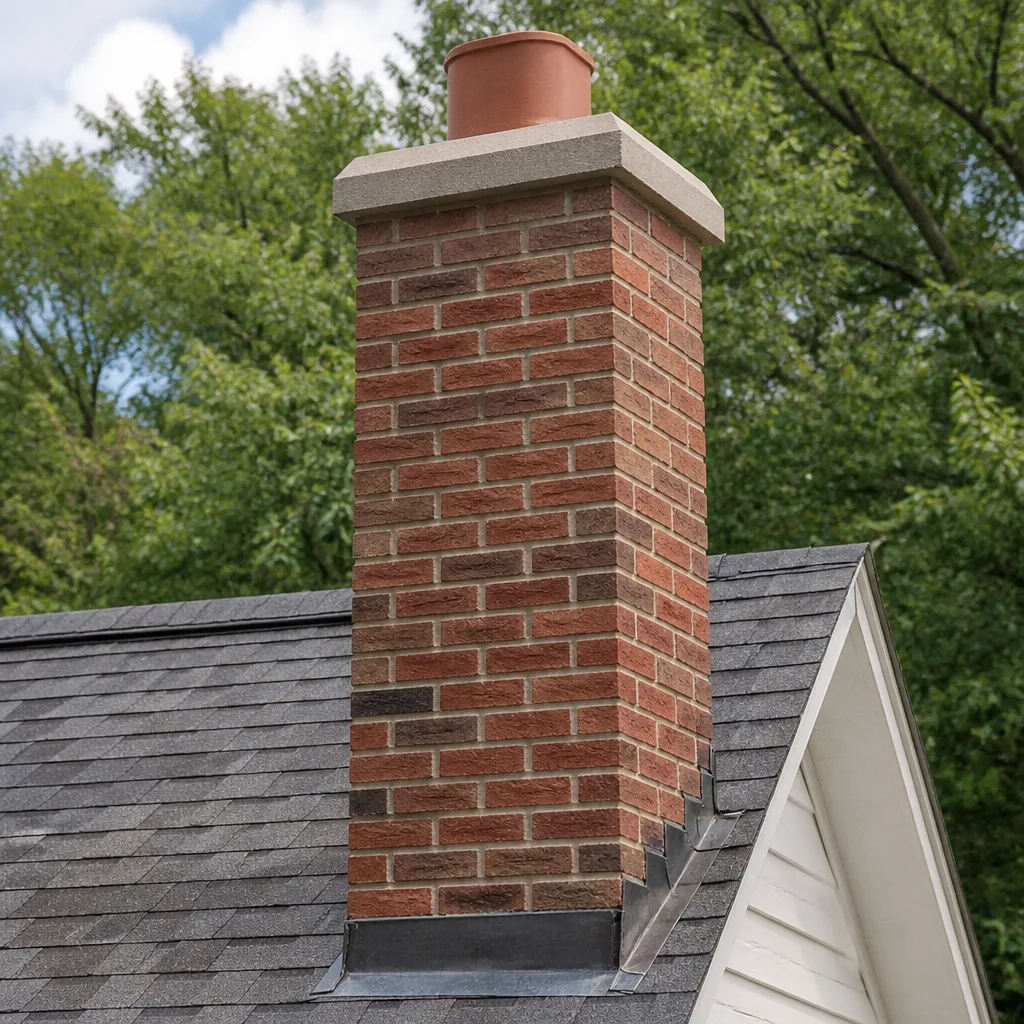 Masonry repair
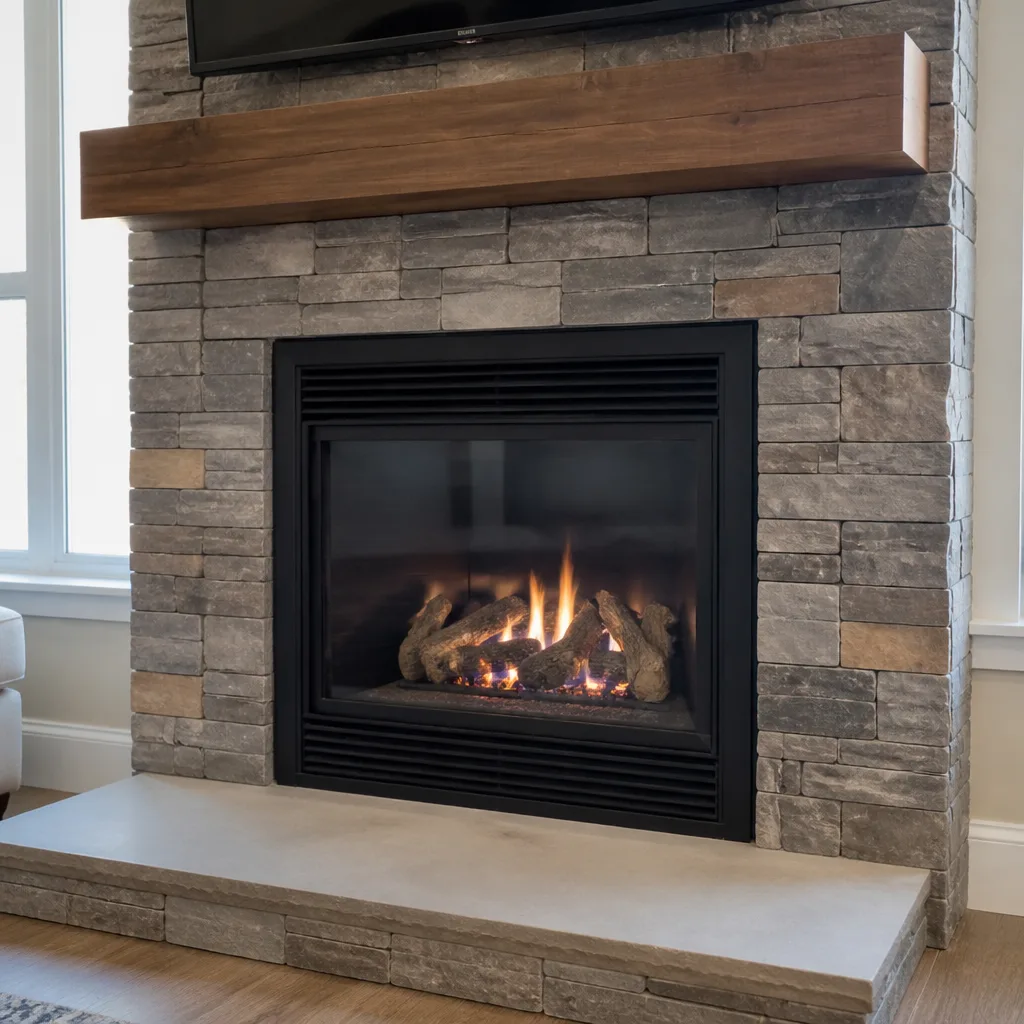 Gas fireplace service
Level 1 sweep and inspection to the NFPA 211 annual standard - flue, crown, cap, and flashing checked and photographed
Chimney sweep logs do not sweep chimneys. They loosen some creosote - which then falls where a brush and vacuum still have to collect it.
Chimney Cleaning Warning Signs: A Spanish Fork Homeowner’s Reference Guide
Most chimney warning-sign lists point at the obvious stuff: smoke rolling back into the room, black streaks on the brick, a fire that won’t draw. The signs that actually cost Spanish Fork homeowners money are quieter than that. They’re the faint smell on a cold morning, the stain above the firebox, the fire that’s a half-second slower to catch than it was last winter. Every one of them gets explained away as normal until a cleaning turns into a repair. This guide walks through the pre-failure indicators, what each one means structurally, and how to tell which ones can wait and which can’t.
Quick Answer
In Spanish Fork, the chimney warning signs that matter most are a faint smoky or chemical smell in the room on cold mornings, brown staining above the firebox opening, inconsistent draft, cracked or spalling brick on the exterior, and a glazed or shiny flue interior. Any of these usually means creosote buildup, a liner joint failure, or water intrusion has already started, and the fix moves from a cleaning to a repair the longer it’s ignored. Draft problems or a fire that won’t stay lit are the sign to stop using the fireplace until it’s looked at.
Styles & brands we work with
- Sweep & inspection
- Caps & crowns
- Flue relining
- Masonry repair
- Gas fireplace service
Table of Contents
- The Smell You Keep Explaining Away
- What Brown Staining Above the Firebox Actually Means
- Draft Inconsistency: Cleaning Issue, Cap Problem, or Liner Failure?
- Exterior Warning Signs Spanish Fork Homeowners Rarely Check
- The One Interior Sign That Means Stop Using the Fireplace
- Creosote Stages and What Each One Tells You
- What a Professional Inspection Actually Looks For
- How Often Should You Schedule Chimney Service in Spanish Fork?
The Smell You Keep Explaining Away
There’s a difference between the smell of a fireplace that’s been used recently and the smell that means something’s wrong. Normal combustion odor is the wood-smoke smell that lingers for a few hours after a fire burns down. It’s the smell of a cold stove, and it fades. The smell that should get your attention is different – sharper, sometimes described as acrid, tar-like, or chemical, and often strongest on cold mornings before a fire is lit. That’s the smell of creosote off-gassing inside the flue, and it’s the single most common warning sign Spanish Fork homeowners dismiss for an entire season.
Some wood-burning appliances leak a faint odor even when they’re running clean. It’s usually a small backdraft or a loose damper, and it’s rarely urgent. But when the smell sharpens and it’s present when the fireplace is cold, you’re not smelling stale air. You’re smelling the fuel inside your flue.
How to Tell the Difference
- Normal: Smoky smell during and shortly after a fire, fades in a few hours.
- Watch: Smoky smell in the room the morning after a fire, before it’s been relit.
- Warning: Acrid, tar-like, or chemical odor on cold mornings with no fire burning.
- Stop: The same acrid smell during a fire, especially paired with smoke in the room.
That third category is the one that leads to a chimney sweep rather than a repair. Glazed creosote, the tough, shiny type that builds up when flue temperatures run low, is exactly what produces that smell. It doesn’t clear with normal brushing, which is why it needs to be identified early, before it hardens into something that requires more than a sweep.
Spanish Fork’s swings between the cold overnight valley air and warmer afternoons push this cycle: a fire burns hot in the evening, then the flue cools quickly overnight and deposits creosote on the cold surfaces. It’s one of the reasons we see glazed buildup more often here than homeowners expect from what looks like a light-use fireplace.
What Brown Staining Above the Firebox Actually Means
Brown or black staining creeping up the brick or stone above and to the sides of the firebox opening can be cosmetic or it can be structural, and the difference matters. Cosmetic staining usually means a small, long-standing draft problem that deposits soot on cool surfaces, often near the corners of the opening. It doesn’t smell and it doesn’t grow. Structural staining means something inside the chimney is leaking, and the stain is the visible edge of it.
Here’s how to read the difference:
- Locate the stain. If it’s concentrated under the damper or at the bottom corners of the opening, it’s likely a draft and soot stain. If it climbs straight up from the top of the opening, it’s more likely moisture or a joint failure above.
- Check the surface. Run a hand across the stain. Chalky, dry, and powdery is soot. Sticky, oily, or soft to the touch means creosote has migrated through a mortar joint.
- Look for a ring. A hard brown ring or tide line, especially at a constant height across the face, is the signature of water moving through the masonry and evaporating at that line.
- Look at the interior of the firebox. Staining inside the firebox that wasn’t there before means the liner or mortar behind it is failing, not just the face brick.
That second and third sign – sticky residue or a hard tide-line ring – is the one that needs a closer look. In Spanish Fork, we see a lot of staining that traces back to a crown that’s no longer shedding water. The chimney repair almost always starts at the top, not at the firebox. If you’re seeing new staining in a fireplace you’ve used for years without issue, that’s the one to photograph and get looked at before fire season.
Draft Inconsistency: Cleaning Issue, Cap Problem, or Liner Failure?
Draft inconsistency is the warning sign most often misdiagnosed by homeowners because the fireplace usually still works. It’s just a little slower than it used to be. The fire takes a minute longer to catch. The damper needs to be a slot more open than you remember. That small change matters. Draft depends on three things: the flue being clean, the chimney being tall enough and unobstructed, and the entire system from firebox to cap being sealed. If any of those is compromised, you’ll feel it before you see it.
Here’s how to start sorting the cause:
- If the fire is sluggish every time, even cold-started: likely cleaning. Creosote and soot narrow the flue, reducing the volume of air the chimney can pull.
- If the fire draws fine when the damper is fully open but struggles otherwise: check the cap. A screen or cap that’s partially blocked with debris or bird nesting restricts airflow at the top.
- If the draft is worse in warm weather or wind: often a cap or height issue. A chimney that’s under-height for its surroundings will behave that way in marginal conditions.
- If the draft is inconsistent and the smell is present: the liner is suspect. Joints that have opened up or a liner that’s cracked will leak air into the chimney at the wrong place, which disrupts draft even when the flue is otherwise clear.
A cleaning resolves the first. Caps and crowns the company installs in-house resolve the second. The fourth is where a sweep alone won’t do it, and where a flexible liner system like DuraFlex earns its place. On older or irregular chimneys, a rigid liner can’t follow the flue’s shape, which leaves gaps at the joints where draft can short-circuit. A flexible liner snugs the interior and closes those gaps.
Exterior Warning Signs Spanish Fork Homeowners Rarely Check
The exterior of the chimney is where the most actionable warning signs live, and it’s the part homeowners almost never look at. Two exterior signs matter more than any others: spalling brick and a cracked or failing crown. Both are direct symptoms of freeze-thaw damage, which is the defining failure mode for masonry in Spanish Fork’s climate. The valley swings between freezing nights and thawing afternoons through winter, and every freeze-thaw cycle pulls moisture out of the brick and pushes it back in. When brick can’t shed water, the face spalls – the surface flakes off in layers, leaving a rough, pitted face.
What to actually look at, from the ground or a window:
- The crown, at the top of the chimney. Any crack wide enough to see from a distance, or any depression that lets water pool on the crown, means it’s no longer shedding water. The crown is the flat concrete or masonry top that caps the chimney; it’s the first line of defense against the water that causes both of the signs below.
- The brick faces. Look for a pattern of flaking or pockmarking, especially on the north or shaded side where moisture lingers longest. A single spalled brick might be minor; a pattern is a moisture problem.
- The mortar joints. Recessed, crumbly, or missing mortar between bricks means water’s getting in there and freezing. It’s a chimney repair issue, not just a cosmetic one.
- The cap and screen. A missing, rusted, or loose cap lets rain and snow fall straight down the flue, and lets birds nest at the top. A loose or missing cap is one of the most common causes of the draft and odor problems above.
- Around the flashing where the chimney meets the roof. Tilted, rusted, or separated flashing is where roof leaks enter the staging.
If you see multiple signs on this list, don’t panic, but do get them looked at before the next winter. Freeze-thaw damage accelerates: each winter that passes with a failing crown adds another year’s worth of moisture to the brick. A crown that gets repaired now is a crown that doesn’t need rebuilding later.
The One Interior Sign That Means Stop Using the Fireplace
If you see any smoke inside the room during a fire – not a faint draft smell, but visible smoke that won’t clear – stop using the fireplace. Relight nothing. The same applies to a smell of combustion gases without visible smoke, dizziness or headaches in the room during or after a fire, or a fire that won’t stay lit and keeps rolling smoke. These are signs the flue is either blocked, cracked, or leaking back into the room, and every fire you burn before it’s diagnosed adds risk.
Carbon monoxide is the reason this is a hard line. A blocked or compromised flue can send combustion gases back into the living space rather than up the chimney, and those gases are colorless and odorless. The smell of combustion gases is the warning you get first, and it’s worth treating as the last warning you’ll get.
What to do if you see this sign:
- Put the fire out and stop using the fireplace.
- Open a window to ventilate the room.
- If anyone in the home has a headache, dizziness, or nausea, get them outside and seek medical attention.
- Get the flue professionally checked before the next fire, not just before the next winter.
This is the one warning sign we treat as urgent in Spanish Fork, and it’s the one that most often gets dismissed as “the fire’s just smoky today.” Whether the cause is a blocked cap, a damaged liner, or a failed joint, it’s the one you call about before you light the next fire.
Creosote Stages and What Each One Tells You
Creosote – the residue of unburned wood smoke condensing on the flue interior – comes in stages, and the stage matters as much as the quantity. Stage 1 is a light, powdery deposit that brushes off easily. Stage 2 is flaky, crusty, and harder to remove, and it often appears where flue temperatures have been too low during burns. Stage 3, sometimes called glazed creosote, is the shiny, tar-like layer that hardens onto the flue wall and cannot be removed with a standard brush.
Here’s the practical difference:
- Stage 1: normal. Sweep on schedule, no repair likely.
- Stage 2: common in Spanish Fork because of the low-burn habits brought on by warmer afternoons. Sweep more frequently and examine for glazing before winter.
- Stage 3: glazed creosote. Cannot be brushed out. It’s a fire hazard and a draft problem simultaneously, and it needs professional treatment.
A number of wood-burning habits produce Stage 3. Burning wet or unseasoned wood, running the fire at low output for long periods, and forgetting to open the damper fully are the three we see most. The fix starts with getting a sweep and reading the flue: what’s actually in there decides whether the next step is a cleaning or a restoration.
For moderate glazing or a damaged flue surface that’s still structurally sound, HeatShield liner resurfacing can restore the interior in place. It’s a ceramic-based resurfacing system that gets applied to the inside of the flue, sealing cracks and renewing the surface without pulling out the existing liner. That’s meaningfully different from a sweep that can only clean, inspect, and tell you a liner replacement is necessary.
What a Professional Inspection Actually Looks For
A professional inspection goes past the surface of the flue and into the structure of the whole chimney system: firebox, damper, flue, cap, crown, and the exterior masonry. The value is in what gets recorded, not in a verbal opinion. A good inspection includes a camera view of the flue – photo evidence of the joints and liners – and notes on the exterior condition you can see for yourself.
What we look at, in order:
- Firebox and damper. Cracks in the firebox walls, a damper that won’t seat, or staining that’s changed since the last inspection.
- Interior of the flue. Camera inspection of the full flue height. The key questions: are the liner joints intact, is the surface sound, is there any block or debris pile that didn’t clear from the top.
- Cap and crown. Crown condition, cap fit, screen condition, and whether anything’s nesting or resting on top.
- Exterior masonry. Brick faces, mortar joints, and flashing where the chimney meets the roof. This is the freeze-thaw check described above.
- Clearances. Confirmation that the chimney is clear of combustible material where it passes through the building.
This is where a full-scope chimney service matters. A sweep who can only clean and inspect stops at the top of the flue; the fixes for the crown, the cap, and the masonry are separate calls. We handle the full system: sweep, inspection, fireplace repair, chimney repair, and crown and cap work. One visit tells you what’s actually wrong, and the written estimate tells you what the fix costs before anything is touched.
How Often Should You Schedule Chimney Service in Spanish Fork?
For a fireplace in regular use, a sweep once a year is the standard, and the best time to book it is before fire season starts. For a Spanish Fork home that only burns a few times a month, a yearly inspection with a sweep when the inspection calls for it is a reasonable schedule. The signs in this guide change the equation: any Stage 2 smell, any new staining, any draft change, or any exterior spalling means you book a sweep and inspection now, regardless of the calendar.
Here’s how to turn this into a working calendar:
- Before each fire season: sweep and inspection. The cooler fall months in Spanish Fork are the right time, when the chimney hasn’t been fired in months and the flue is clear enough to see.
- After any unusually slow-drawing year: another inspection, even if you swept in the fall. A changed draft tells you something’s different and worth a look.
- After any exterior damage: a chimney repair inspection. Crown and cap checks catch the water intrusion that drives most of the damage above.
- After a smoky fire or any interior smoke event: a professional check before the next fire.
Regular service doesn’t guarantee a chimney never fails, but it stops the failures from sneaking up between visits. The Chimney Sweep Spanish Fork team keeps the full picture in one place: cleaning, inspection, and repair, with a camera record showing you what’s actually in the flue and what we recommend fixing.
Common Mistakes to Avoid
- Dismissing the cold-morning smell as a draft. The acrid smell with no fire burning is creosote, not a chimney quirk. Explaining it away for a season is how a cleaning becomes a restoration.
- Reading staining as cosmetic without checking above it. A brown stain climbing from the firebox is often a moisture trail from a failed crown or joint. If the chimney’s leaking at the top, the water is coming down through the liner.
- Assuming a chimney needs replacing when the flue can be resurfaced. HeatShield and flexible liner systems like DuraFlex exist specifically because not every damaged flue needs a full tear-out. A sweep who only cleans and inspects can’t tell you the difference.
- Chalking up draft problems to “it’s always been that way.” Draft doesn’t slowly get worse on its own. A half-second delay in the fire catching is a signal, usually of a narrowing flue or a cap restriction.
- Skipping the exterior check between winters. Spalling brick along the freeze-thaw line is one of the few warnings you can see from the ground. Look at the chimney once a year, and especially after the first freeze.
- Burning unseasoned or wet wood to get more heat out of fewer logs. Wet wood produces more tar-like creosote, and it’s the fastest track to Stage 3. The stage you see on the interior is the flame’s response to what’s been burned.
- Treating a missing chimney cap as a small thing. A cap is the reason repairs last. Without it, water goes down the flue and the freeze-thaw cycle starts from the inside.
See the difference
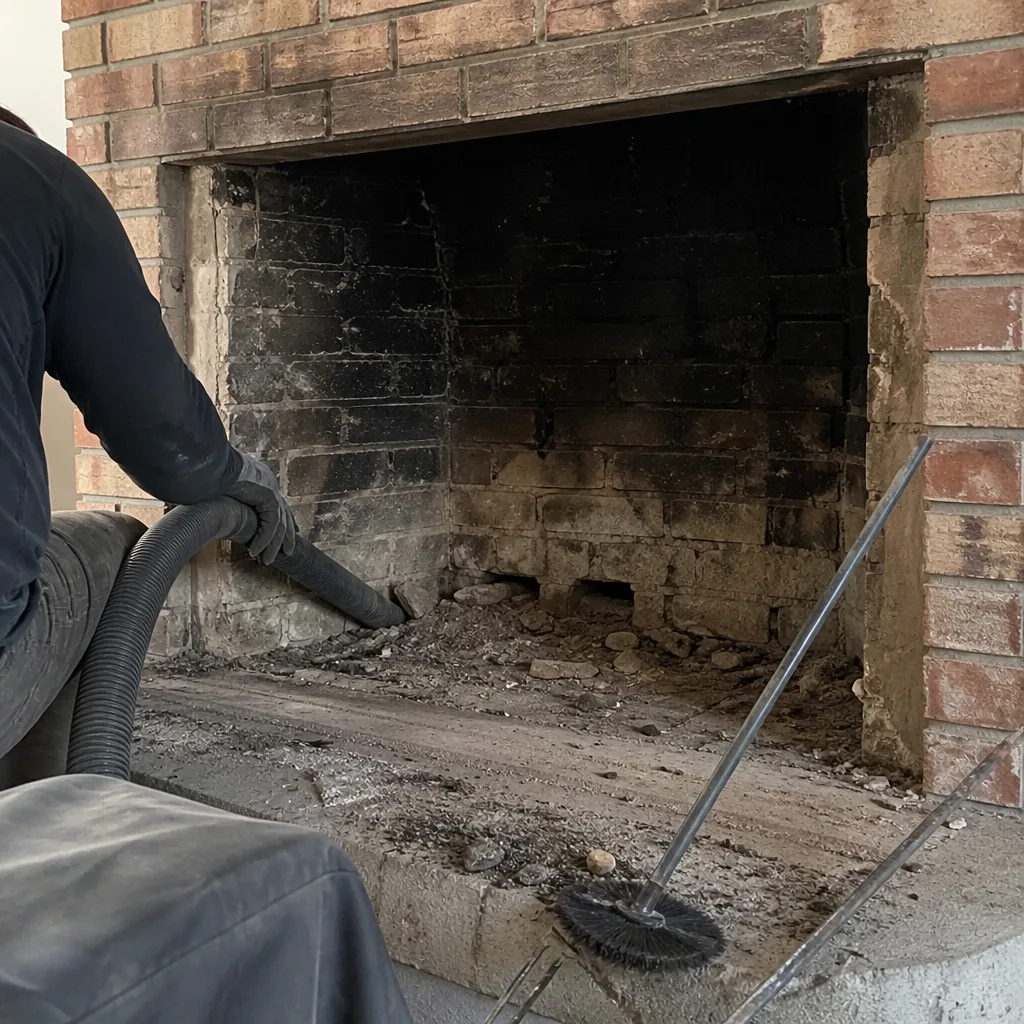 Before
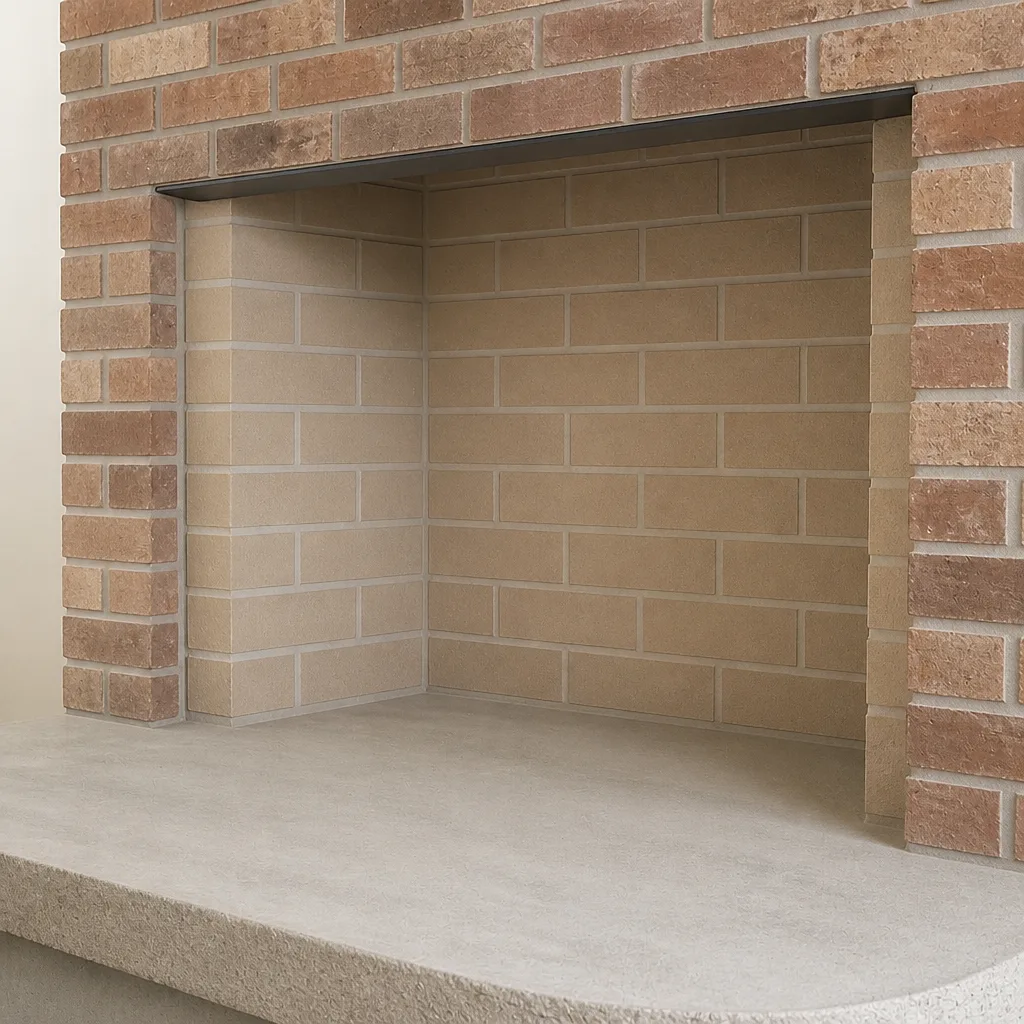 After
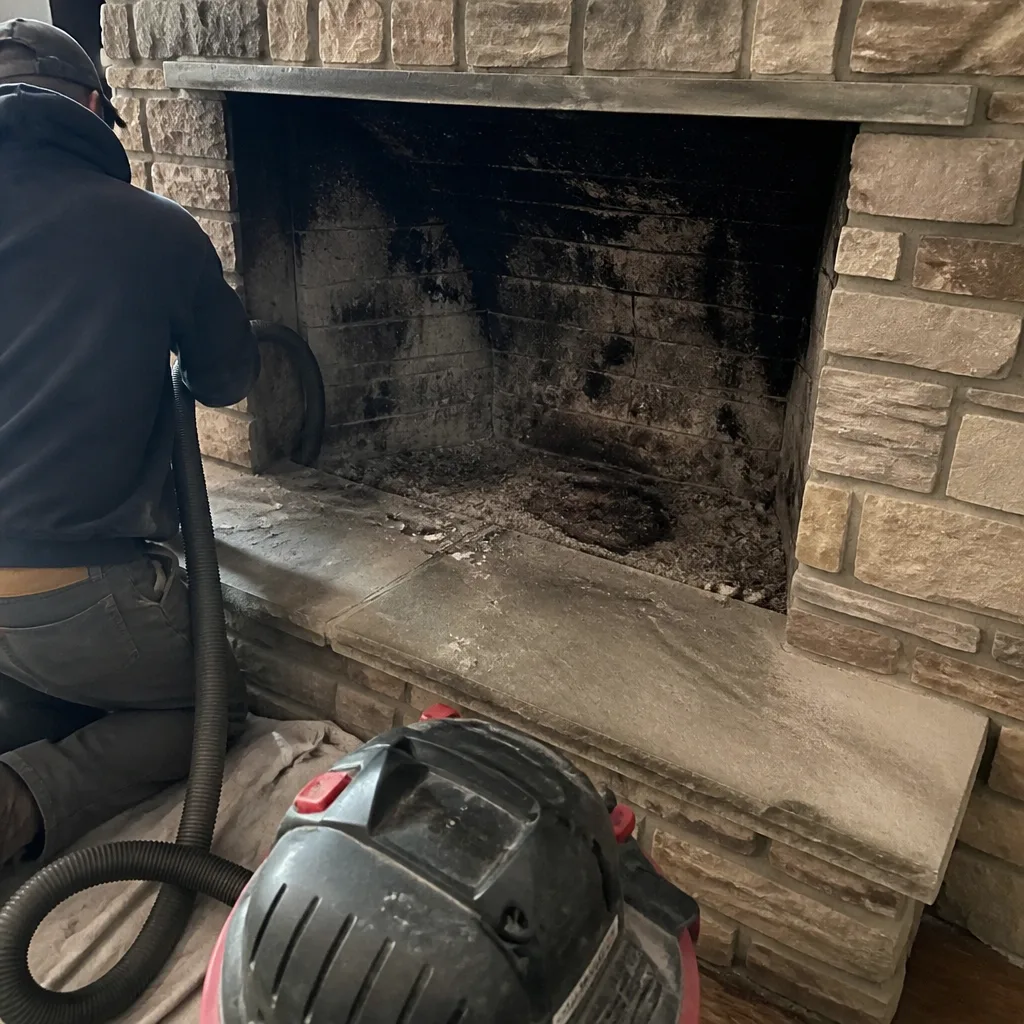 Before
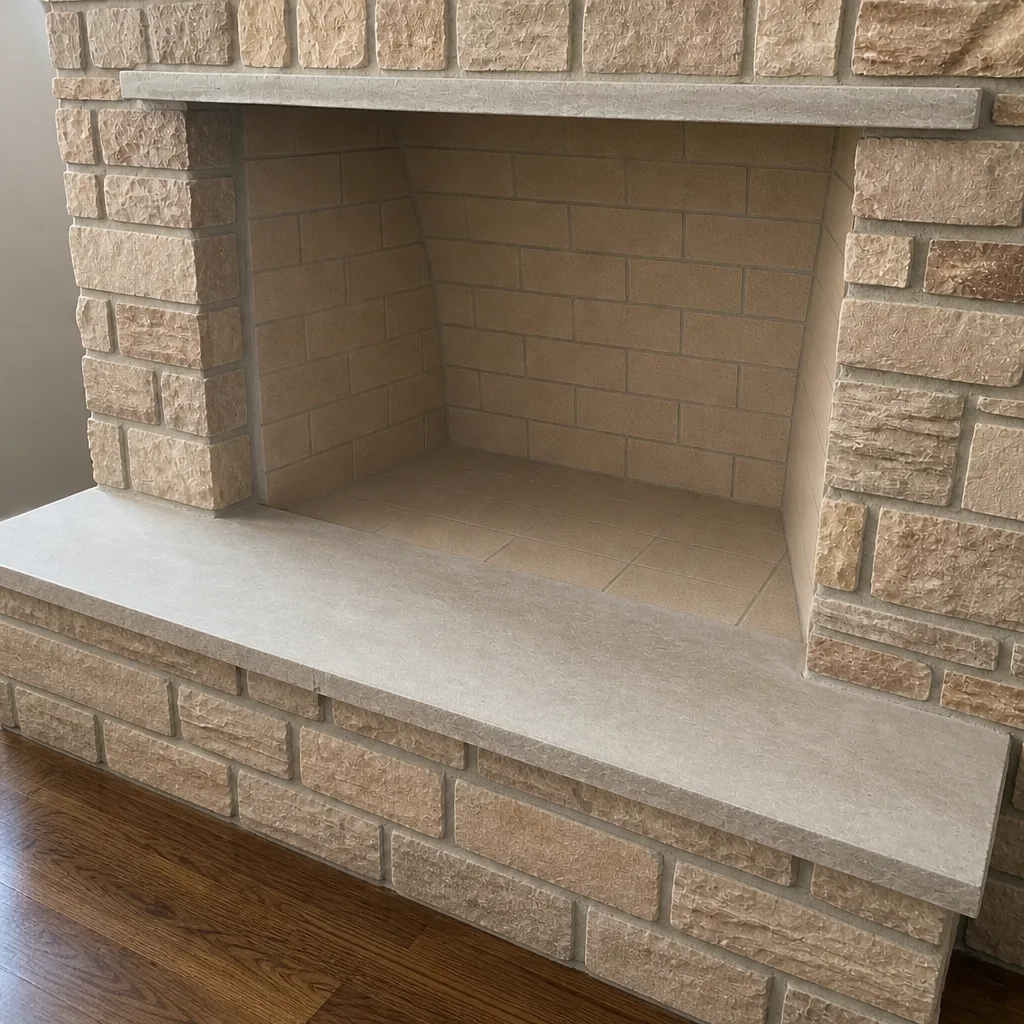 After
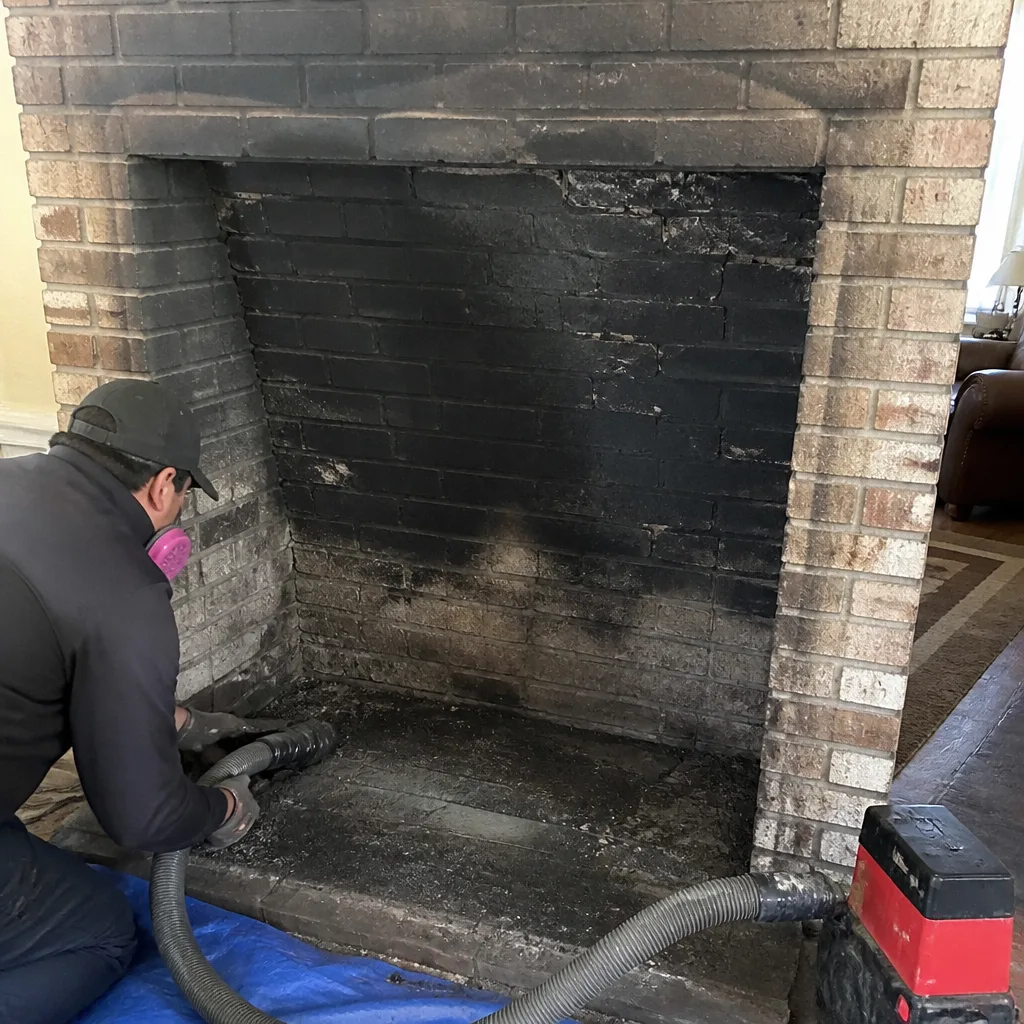 Before
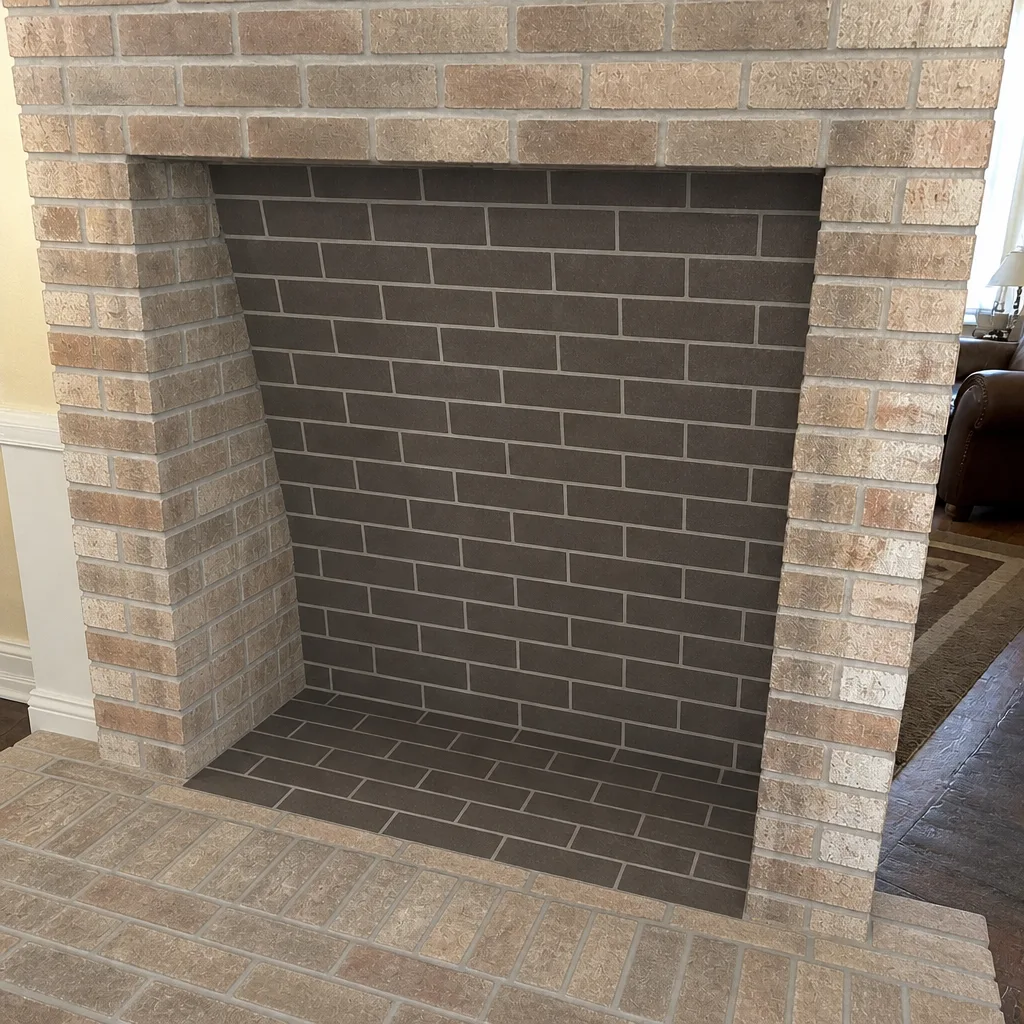 After
When to Call a Professional
Call a professional if you see any of the following: visible smoke in the room during a fire, a faint acrid smell in the room on cold mornings, a new brown stain above the firebox, draft that’s changed noticeably from one winter to the next, spalling brick or a cracked crown on the exterior, or a flare of chimney fire or sudden roar from the flue. In each of these, the diagnosis matters as much as the cleaning, and a camera inspection is the way to see exactly what’s going on.
Chimney Sweep Spanish Fork offers free estimates in Spanish Fork. We tell you what we find and quote the fix before we touch anything. Call (877) 492-4380. We answer 24/7. Fast dispatch from 7am to 7pm, Sunday through Friday.
Frequently Asked Questions
The most common chimney warning sign in Spanish Fork is a faint acrid or smoky smell in the living room on cold mornings before a fire is lit. It’s often the first readable sign of Stage 2 creosote or a liner joint that’s opened, and it’s the warning most homeowners explain away for a whole season. Call (877) 492-4380 to schedule a sweep and inspection.
Not always. If the damage is moderate glazing or a cracked, but structurally sound, flue surface, HeatShield liner resurfacing can restore the interior without tearing out the existing liner. When the flue is irregular or too far gone for resurfacing, a flexible liner like DuraFlex follows the shape of the chimney where a rigid one can’t. The camera inspection is what tells us which path you’re on, and we show you the evidence before we quote anything. Call (877) 492-4380 for an exact quote – estimates are free.
A chimney in regular use should be swept once a year, and the best time is before fire season starts. If you burn only occasionally, a yearly inspection with a sweep when needed is a reasonable schedule. Any of the warning signs in this guide – cold-morning smell, new staining, changed draft, or exterior spalling – moves that to now, regardless of the calendar. Call (877) 492-4380 to book a sweep and inspection.
A chimney inspection is quoted per job, based on what the chimney needs. The best way to get an exact price is a free estimate in person, with a written quote before any work starts. The price set by that written estimate is what you pay; we don’t add a fee when we arrive. Call (877) 492-4380 – estimates are free.
A cleaning removes what’s on the flue’s interior: creosote, soot, and debris. A repair fixes something that’s compromised: a damaged liner, a failed crown, a spalling brick, a loose cap. A sweep is the right answer for the first; the rest need someone who can restore the chimney’s structure. We handle both, so the diagnosis and the fix happen in one place. Call (877) 492-4380.
Not automatically, but it should be inspected before the next fire season. A single cosmetic soot stain isn’t a stop-use sign. A brown tide-line ring, sticky residue, or a stain that’s clearly new and growing is a moisture or joint failure that needs to be looked at before the next fire. Call (877) 492-4380 to book an inspection.
Yes. A cap is the top line of defense against water entering the flue, and without it, rain and snow come straight down the chimney and soak the crown, the masonry, and the liner from the inside. Most of the chimney damage we see behind the warning signs in this guide traces back to water. A cap isn’t an upsell – it’s the reason repairs last. Call (877) 492-4380 to talk through your chimney’s current condition.
The Bottom Line
The chimney warning signs that matter in Spanish Fork are the quiet ones: the cold-morning smell, the tide-line stain, the half-second draft delay, the flaked brick on the exterior. Each of them is readable, and each of them points to something specific – creosote, a liner joint, the crown, or a missing cap. The choice isn’t whether to fix the chimney; it’s whether you catch it as a cleaning or as a repair. If you’re not sure which warning signs your chimney is showing, book a chimney sweep in Spanish Fork for the answer. Call (877) 492-4380 for a free estimate. We handle the full system – sweep, inspect, repair, and protect – so the fix and the diagnosis happen in one place.
Written by the team at Chimney Sweep Spanish Fork.